
Share Olaff's profile


Olaff
Olaff's stats
- Review count13
- Helpfulness votes17
- First reviewMay 31, 2014
- Last reviewJune 29, 2018
- Featured reviews0
- Average rating4.8
Reviews comments
- Review comment count0
- Helpfulness votes0
- First review commentNone
- Last review commentNone
- Featured review comments0
Questions
- Question count0
- Helpfulness votes0
- First questionNone
- Last questionNone
- Featured questions0
- Answer count13
- Helpfulness votes83
- First answerDecember 26, 2014
- Last answerMay 14, 2016
- Featured answers0
- Best answers3
![Mad Max: The Complete Trilogy [Blu-ray]](https://pisces.bbystatic.com/prescaled/500/500/image2/BestBuy_US/images/products/304b2327-370a-41e7-956a-951dd4939472.png)
Mel Gibson became an international star with the post-apocalyptic Mad Max films, all three of which - Mad Max, The Road Warrior, and Mad Max Beyond Thunderdome -- are collected in this box set.
Customer Rating

5
Great Fun!
on December 26, 2014
Posted by: Olaff
from Suburban Chicago
Verified Purchase:Yes
This set is just the ticket for Mad Max fans now that it's available in Blu-ray.
My Best Buy number: 2705266095
My Best Buy number: 2705266095
I would recommend this to a friend!
Share this review:


0points
0of 0voted this as helpful.
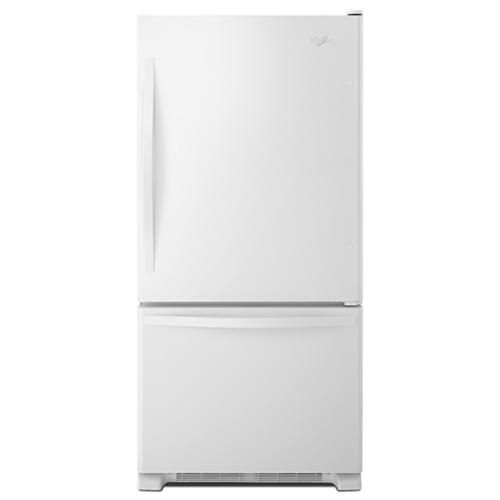
Conveniently store your family's essentials with this bottom mount refrigerator. Purposeful spaces like the deli drawer and FreshFlow produce preserver store everyday items in their ideal environment, while spillproof glass shelves simplify cleanup. Plus, interior LED lights will keep food looking as good as it tastes.
Customer Rating

3
Too noisy.
on November 15, 2014
Posted by: Olaff
from Suburban Chicago
Verified Purchase:Yes
The lighting and shelf flexibility are terrific! All the drawers are too small and are smaller than the 18 cubic foot refrigerator it has replaced. A butter tray (door mount) is not included and so must be purchased separately. This refrigerator is annoyingly noisy; ergo the three star rating.
My Best Buy number: 2705266095
My Best Buy number: 2705266095
No, I would not recommend this to a friend.
Share this review:


+3points
10of 17voted this as helpful.
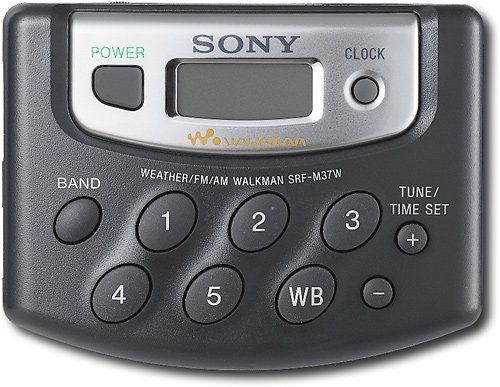
Jam to your favorite AM/FM radio stations and get current weather updates with this portable digital AM/FM radio that features 20 AM/FM station presets and weather band reception.
Customer Rating
5
Perfect small, light radio
on May 31, 2014
Posted by: Olaff
from Suburban Chicago
Verified Purchase:Yes
This radio is light and easily fits into my shirt pocket during exercise. The Best Buy price matching made this an excellent purchase but the included headphones were immediately replaced by smaller and lighter ones. I would buy this radio again.
My Best Buy number: 2705266095
My Best Buy number: 2705266095
What's great about it: Small size and battery life
What's not so great: headphones
I would recommend this to a friend!
Share this review:


+1point
1of 1voted this as helpful.
Olaff's Review Comments
Olaff has not submitted comments on any reviews.
Olaff's Questions
Olaff has not submitted any questions.
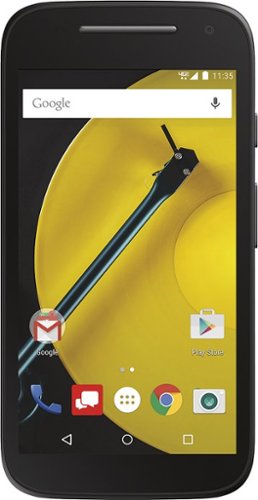
Stay connected on the go with this Verizon Wireless Prepaid Motorola Moto E MOTXT1528PP no-contract cell phone, which features fast processing speeds, plus 4G LTE and Wi-Fi for fast Internet connection. Bluetooth technology lets you sync with compatible devices.
Do I have to use the $45.00 plan?
I currently use the 35.00 plan and do not have a smartphone. If I upgrade do I have to pay more for my plan?
Smart phones provide POTS, Plain Old Telephone Service, as well as all the fun things that endear themselves to so many users. No, it is not necessary to upgrade Verizon service to use the Moto e phone. You will be able to use it as a regular phone and can still enjoy the smart phone features, but NOT text, when you have WiFi access.
If you want to text and use apps when not in a WiFi zone, then a plan must be purchased that supports these functions. There ain't no such thing as a free lunch.
TANSTAAFL
P.S. You could consider using another carrier...
If you want to text and use apps when not in a WiFi zone, then a plan must be purchased that supports these functions. There ain't no such thing as a free lunch.
TANSTAAFL
P.S. You could consider using another carrier...
10 years ago
by
Olaff
Stay connected on the go with this Verizon Wireless Prepaid Motorola Moto E MOTXT1528PP no-contract cell phone, which features fast processing speeds, plus 4G LTE and Wi-Fi for fast Internet connection. Bluetooth technology lets you sync with compatible devices.
can I use this phone on Net10, etc?
This Verizon Moto e is a CDMA handset. The good news is that Net10 supports CDMA as well as GSM technologies. Yes, this Moto e will work with Net10 service.
10 years ago
by
Olaff
Stay connected on the go with this Verizon Wireless Prepaid Motorola Moto E MOTXT1528PP no-contract cell phone, which features fast processing speeds, plus 4G LTE and Wi-Fi for fast Internet connection. Bluetooth technology lets you sync with compatible devices.
Is this phone a CDMA Handset?
Yes, this Verizon phone supports CDMA.
10 years ago
by
Olaff
Conveniently store your family's essentials with this bottom mount refrigerator. Purposeful spaces like the deli drawer and FreshFlow produce preserver store everyday items in their ideal environment, while spillproof glass shelves simplify cleanup. Plus, interior LED lights will keep food looking as good as it tastes.
type of exterior finish?
looking for a smooth finish, white Energy star fridge with bottom freezer. Does this fridge have the textured finish or the smooth finish?
Smooth.
10 years, 6 months ago
by
Olaff
Suburban Chicago
Conveniently store your family's essentials with this bottom mount refrigerator. Purposeful spaces like the deli drawer and FreshFlow produce preserver store everyday items in their ideal environment, while spillproof glass shelves simplify cleanup. Plus, interior LED lights will keep food looking as good as it tastes.
How can you remove the divider in the freezer
I don't choose to use the icemaker and would like to have the top freezer basket more open.
Yes, the dividers can be removed. The plastic clip in the very back of the basket sits over the rim. Pry this slightly apart and lift up to release the dividers.
10 years, 6 months ago
by
Olaff
Suburban Chicago
Jam to your favorite AM/FM radio stations and get current weather updates with this portable digital AM/FM radio that features 20 AM/FM station presets and weather band reception.
How far from a FM station can reception be expected, is the distance different for AM and Weather
There are number of variables associated with reception distance including broadcast power, receiver sensitivity, broadcast interference, physical obstacles, solar activity, weather, etc. To keep things simple though FM stations are considered line of sight so the fewer obstacles between the broadcast antenna and the receiver, the better the reception. Have you ever tried to listen to an FM station in a retail store? Not good! The net of this is that the curvature of the Earth is the ultimate source of FM blocking so the practical maximum distance for FM broadcasts is 90-100 miles under ideal conditions.
AM is a completely different animal though still subject to the previously stated radio reception variables. High powered (50,000 watts maximum in the U.S.) AM stations are commonly heard 500 to 1,000 miles away at night when conditions are good and sometimes even go significantly farther. This is because a portion of the original AM signal is reflected back to earth by the ionosphere and so is not limited to line of sight reception.
Weather stations in the U.S. are an extension of the FM band and therefore share the distance limitations of their other family members.
AM is a completely different animal though still subject to the previously stated radio reception variables. High powered (50,000 watts maximum in the U.S.) AM stations are commonly heard 500 to 1,000 miles away at night when conditions are good and sometimes even go significantly farther. This is because a portion of the original AM signal is reflected back to earth by the ionosphere and so is not limited to line of sight reception.
Weather stations in the U.S. are an extension of the FM band and therefore share the distance limitations of their other family members.
11 years, 5 months ago
by
Olaff
Suburban Chicago
Jam to your favorite AM/FM radio stations and get current weather updates with this portable digital AM/FM radio that features 20 AM/FM station presets and weather band reception.
DOES IT HAVE A "HOLD" BUTTON?
A HOLD FUNCTION PREVENTS ACCIDENTAL CHANGING OF STATION.
I am glad to inform you there is indeed a switch that prevents any changes to the selected station. In fact, the radio can not be turned off either while the switch is selected.
11 years, 5 months ago
by
Olaff
Suburban Chicago
Jam to your favorite AM/FM radio stations and get current weather updates with this portable digital AM/FM radio that features 20 AM/FM station presets and weather band reception.
Does it have TV sound?
I was told by Sony customer service that model SRF-M37W also has TV sound but I see no mention of it. Does it have TV sound?
No TV sound on this machine. In the olden days, TV broadcasts used analog frequency modulation (FM) transmission and so capturing TV sound on the radio wasn't too difficult. With the digitization of TV signals now, a radio would require a completely separate tuner (technically very possible) but beyond the design and marketing scope of this small and inexpensive radio.
11 years, 5 months ago
by
Olaff
Suburban Chicago
Jam to your favorite AM/FM radio stations and get current weather updates with this portable digital AM/FM radio that features 20 AM/FM station presets and weather band reception.
AM reception
Hi..all I am looking for is a small AM radio that I can use to listen to sports talk radio while I ride the train to and from work. Sounds simple, but everything I try fails. I assume the train interferes with the reception, but this is absurd. Help!
This radio has a pretty good digital tuner but the small size prevents having much of an antenna to pull in weak/blocked signals. I use this radio in a modern steel/brick/glass building and signal fades in and out depending on my body position and location. My recommendation would be to purchase a slightly larger but still portable short wave radio that will also cover the traditional AM frequencies. If you buy one with a jack for an external antenna, you could then run a short piece of wire to capture more signal. You might also try using this antenna jack with a short wire and an alligator clip to attach to anything metal on the train.
11 years, 5 months ago
by
Olaff
Suburban Chicago
Jam to your favorite AM/FM radio stations and get current weather updates with this portable digital AM/FM radio that features 20 AM/FM station presets and weather band reception.
can the radio bought in USA be used in China?
can the radio bought in USA be used in China?
I just did a quick Google search for both AM and FM Chinese radio stations and it looks like a good frequency match for US radio. I am very impressed; how does it know when to speak English or Chinese?
11 years, 5 months ago
by
Olaff
Suburban Chicago