WhirlpoolTeam
WhirlpoolTeam's Stats
Reviews
- Review Count0
- Helpfulness Votes0
- First ReviewNone
- Last ReviewNone
- Featured Reviews0
- Average Rating0
Reviews Comments
- Review Comment Count0
- Helpfulness Votes0
- First Review CommentNone
- Last Review CommentNone
- Featured Review Comments0
Questions
- Question Count0
- Helpfulness Votes0
- First QuestionNone
- Last QuestionNone
- Featured Questions0
- Answer Count17779
- Helpfulness Votes7,133
- First AnswerJune 16, 2015
- Last AnswerSeptember 15, 2026
- Featured Answers0
- Best Answers891
WhirlpoolTeam's Reviews
WhirlpoolTeam has not submitted any reviews.
WhirlpoolTeam's Questions
WhirlpoolTeam has not submitted any questions.
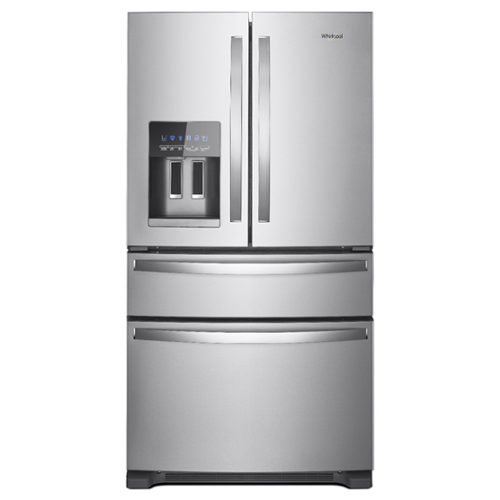
This French Door refrigerator with Exterior Water Dispenser and Whirlpool Water Filtration gives you the storage you need with the flexibility you want. With features like a Refrigerated Exterior Drawer, keep items you use most within reach. Get instant access to freshly filtered water and ice without opening the door. Adjustable Shelves and Gallon Door Bins easily move up or down to help make room for tall items while keeping everyday items in sight.
How do I reset the front panel lights on WRMF3636RZ?

We would like to suggest that you try turning the circuit breaker to the appliance off for one full minute to possibly reset the control. If that is unsuccessful we would recommend contacting Whirlpool® at 800-253-1301. We are available M -F 8 am to 6 pm EST. They will be better able to assist you.
1 month, 2 weeks ago
by
Posted by:
WhirlpoolTeam
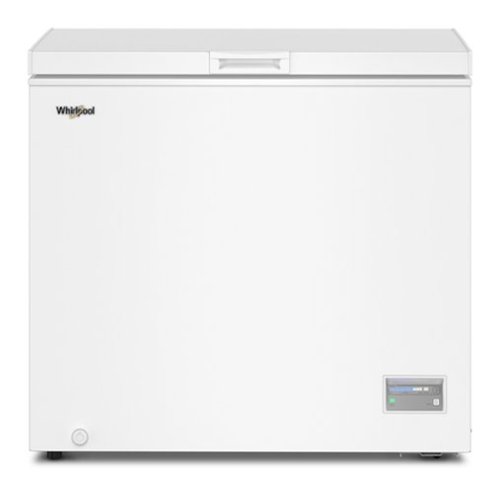
Bring flexibility to your garage with a 7 cu. ft. Chest Freezer designed to adapt to your life. Get optimal organization with a modular Single Storage Basket and easily look for items and grab your food without the need to hold the lid open with Counterbalanced Lid.
IS THIS FREEZER ENERGY STAR RATED
Hello! Model WZCN317TW is not ENERGY STAR Qualified. Thank you for your inquiry about our Whirlpool® appliances.
1 month, 2 weeks ago
by
Posted by:
WhirlpoolTeam
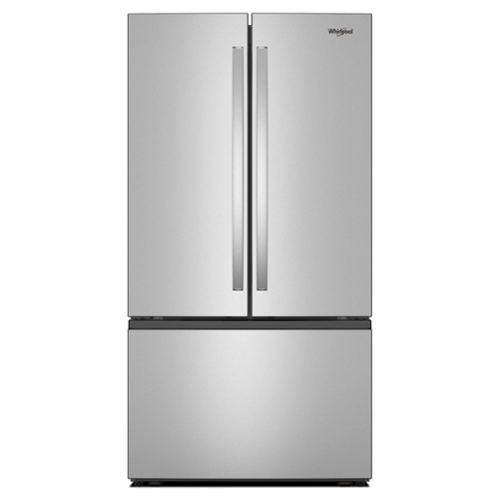
Get Family-Sized capacity with the Whirlpool 31 cu. ft. French door refrigerator. Large Capacity Ice Production makes over 3 lbs of ice every day. Pint Size storage provides easy access to small items. And flexible storage with half and full Adjustable Glass Shelves.
Can kitchenaid door handle works on this whirlpool
Hello! We can only recommend the handles that this model was manufactured with. We greatly apologize.
1 month, 2 weeks ago
by
Posted by:
WhirlpoolTeam
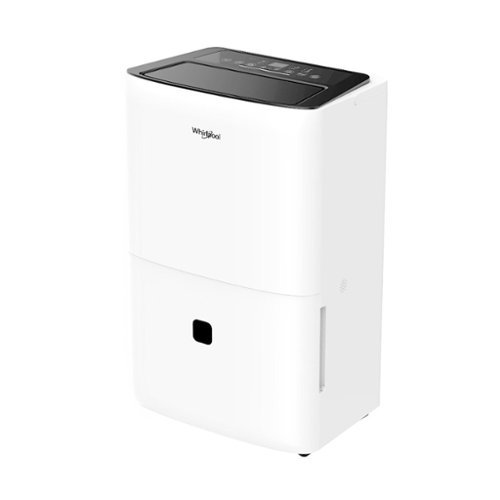
Take control of excess moisture and enjoy a more comfortable home with the Whirlpool 50 Pint Energy Star Certified Dehumidifier. Designed to remove up to 50 pints of moisture per day with an impressive 2.01 IEF & Energy Star 6.0 certification, it delivers powerful performance while helping reduce utility costs. Smart electronic controls make comfort effortless. An adjustable humidistat ranging from 35 - 80%, Comfort Mode, and a color-coded humidity indicator let you monitor conditions at a glance and fine-tune settings with ease. Enhanced airflow, powered by three fan speeds and auto-swing air discharge, distributes dry air evenly for faster, more consistent results. This dehumidifier operates as quietly as 45 dBA and performs reliably in cooler environments down to 41F thanks to auto-defrost technology. A removable front-access bucket with automatic shutoff, built-in drainage pump, washable filter, and clear water-level window simplify maintenance.
The description states “with pump” but the specifications list “no integrated pump”…which is it?
Our Whirlpool Portable Dehumidifiers, Portable Air Conditioners, and Window Air Conditioners are handled through a specialty department. You can reach them Monday-Friday at 800-207-1156 between 9:00 AM to 5:00 PM. You may also reach them at http://www.whirlpoolhomecomfort.com.
1 month, 3 weeks ago
by
Posted by:
WhirlpoolTeam
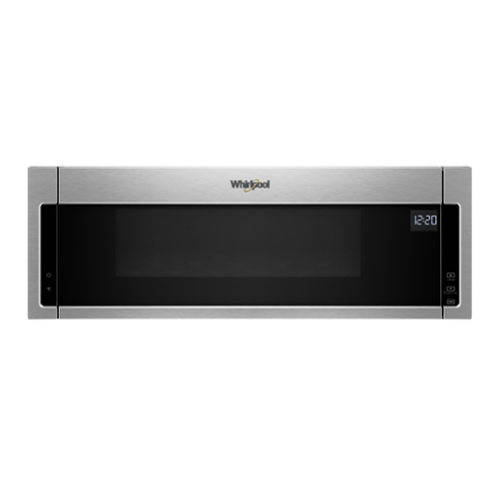
Find a better fit for your kitchen with this small over-the-range microwave with vent that removes smoke, odor and moisture like a standard hood. Save space with a low profile design that fits in the same space as your undercabinet hood but can still cook all the essentials with 1.1 cubic feet of purposeful capacity and 1,000-wattcooking power.
How high does it need to be mounted above gas range?
Thank you for reaching out to us with your inquiry regarding the WML55011HS model. We understand how important it is to have the exact measurements when planning your space, and we are happy to help you find that information.
For the specific dimensions you need, we recommend reviewing page 3 of the installation instructions. You can access the document via the following link:
https://s3.amazonaws.com/sm-backend-production-attachments/installation-instructions-w11359126-revc.pdf
We want to ensure your installation process goes as smoothly as possible. Please let us know if there is anything else we can assist you with.
For the specific dimensions you need, we recommend reviewing page 3 of the installation instructions. You can access the document via the following link:
https://s3.amazonaws.com/sm-backend-production-attachments/installation-instructions-w11359126-revc.pdf
We want to ensure your installation process goes as smoothly as possible. Please let us know if there is anything else we can assist you with.
1 month, 3 weeks ago
by
Posted by:
WhirlpoolTeam
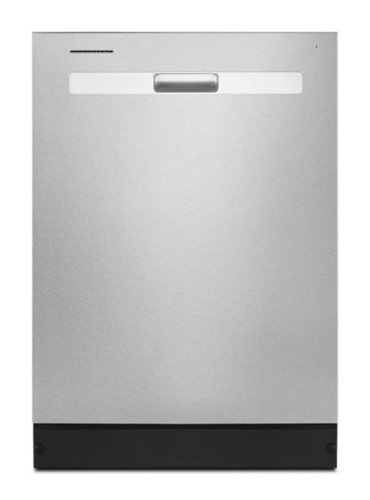
Clean dishes with a 55 dBA quiet dishwasher. Three 5" Cup Shelves free up extra space and a Boost Cycle provides extra effort for cleaning up stubborn messes. This dishwasher includes an Extended Dry Option to elevate drying performance and a Triple Filtration Wash System that filters food particles and cleans the water between wash stages.
Is this portable
Thank you for reaching out to us. We truly appreciate your interest in our Whirlpool® appliances.
We understand you are looking for details regarding the WDP540HAMZ model. We want to clarify that this specific Whirlpool® dishwasher is not designed as a portable model. Please let us know if you have any other questions, as we are here to help.
We understand you are looking for details regarding the WDP540HAMZ model. We want to clarify that this specific Whirlpool® dishwasher is not designed as a portable model. Please let us know if you have any other questions, as we are here to help.
1 month, 3 weeks ago
by
Posted by:
WhirlpoolTeam

Get Family-Sized capacity with the Whirlpool~ 30 cu. ft. French door refrigerator. Fill up quick with In-door Filtered Water & Ice Dispenser. Make more ice when you need it with Dual Ice Makers. And Pint Size storage provides easy access to small items.
1. How do I set the open door alarm? 2. How do I adjust the volume of the open door alarm?
Hello! Thank you for reaching out to us. We understand how important it is to have control over your appliance's settings, and we truly appreciate you checking with us regarding the door alarm.
Unfortunately, this alarm is a key safety feature, and while we understand this can be frustrating, it cannot be permanently turned off. You can temporarily silence the sound by pressing any button on the control panel while the doors are open, though please be aware that the door ajar icon will continue to be displayed.
Additionally, the alarm volume itself cannot be adjusted.
For your reference, here is the quick start guide: https://s3.amazonaws.com/sm-backend-production-attachments/quick-start-guide-w11767769-revb.pdf.
We apologize for any inconvenience this may cause and thank you for your patience. Thank you for your inquiry about our Whirlpool® appliances.
Unfortunately, this alarm is a key safety feature, and while we understand this can be frustrating, it cannot be permanently turned off. You can temporarily silence the sound by pressing any button on the control panel while the doors are open, though please be aware that the door ajar icon will continue to be displayed.
Additionally, the alarm volume itself cannot be adjusted.
For your reference, here is the quick start guide: https://s3.amazonaws.com/sm-backend-production-attachments/quick-start-guide-w11767769-revb.pdf.
We apologize for any inconvenience this may cause and thank you for your patience. Thank you for your inquiry about our Whirlpool® appliances.
1 month, 3 weeks ago
by
Posted by:
WhirlpoolTeam
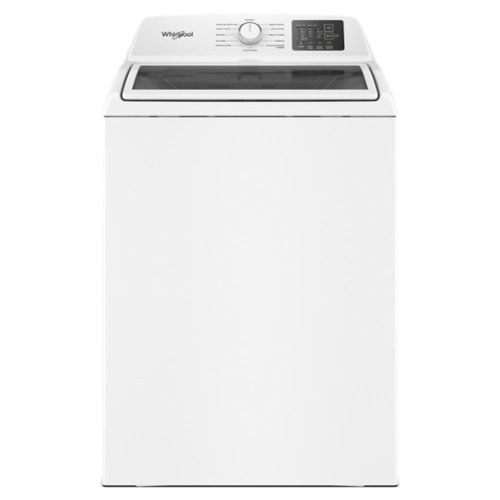
Choose how you handle each hamper with the Whirlpool Top Load Washer with Impeller and Soft Close Glass Lid. Presoak helps you to gently release soils with a 30 minute presoak and wash all in one cycle. Sanitize cycle cleanses loads with increased wash temps and Oxi. Cold Water Wash allows you to get a thorough clean and save on energy bills.
What is the warranty?
Hello! The manufacturer's warranty for model WTW4300SW Whirlpool® Washer would be ONE (1) YEAR FROM THE DATE OF DELIVERY OF THE ORIGINAL PURCHASE (PARTS AND LABOR INCLUDED): Whirlpool brand of Whirlpool Corporation or Whirlpool Canada, LP (hereafter “Whirlpool”) will pay for factory-specified replacement parts and labor to correct defects in materials or workmanship that existed when this major appliance was purchased, or at its sole discretion, replace the product. In the event of product replacement, your appliance will be warranted for remaining term of the original unit’s warranty period. Thank you for your inquiry about our Whirlpool® appliances.
1 month, 3 weeks ago
by
Posted by:
WhirlpoolTeam
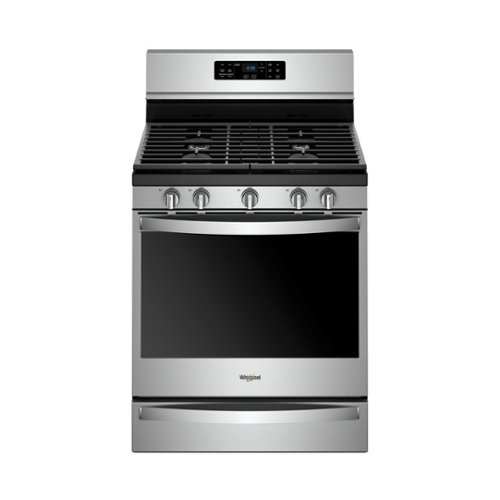
Whirlpool - 30 in. Wide 5 burners 5.8 cu. ft. Freestanding Gas Convection Range with Self-Cleaning - Stainless Steel
Upgrade your kitchen appliance setup with this Whirlpool freestanding gas range. The convection oven features an integrated temperature sensor to deliver even, efficient heating, while the SpeedHeat burner provides faster cooking times for pastas, rice and sides. Featuring a self-cleaning oven and EZ-2-Lift stovetop grates, this Whirlpool freestanding gas range allows for effortless after-meal cleanup.
Does this work with propane or just natural gas?
Hello! Model WFG775H0HZ Whirlpool® Range will work with LP and Natural gas. Thank you for your inquiry about our Whirlpool® appliances.
1 month, 3 weeks ago
by
Posted by:
WhirlpoolTeam
Get Family-Sized capacity with the Whirlpool~ 30 cu. ft. French door refrigerator. Fill up quick with In-door Filtered Water & Ice Dispenser. Make more ice when you need it with Dual Ice Makers. And Pint Size storage provides easy access to small items.
What is the energy rating? Does it have single or dual evaporators?
Thank you for reaching out to us regarding your Whirlpool® refrigerator model WRFF3736SZ. We completely understand the importance of knowing these technical details when choosing the right appliance for your home, and we are happy to assist you.
We can confirm that this model uses a single evaporator system. We are also pleased to let you know that this model is ENERGY STAR® Qualified. You can view the full details regarding its energy certification here: https://www.energystar.gov/productfinder/product/certified-residential-refrigerators/details/3893926/export/pdf
We truly appreciate you choosing Whirlpool® appliances. If we can assist you with anything else, please let us know—we are always here to help.
We can confirm that this model uses a single evaporator system. We are also pleased to let you know that this model is ENERGY STAR® Qualified. You can view the full details regarding its energy certification here: https://www.energystar.gov/productfinder/product/certified-residential-refrigerators/details/3893926/export/pdf
We truly appreciate you choosing Whirlpool® appliances. If we can assist you with anything else, please let us know—we are always here to help.
1 month, 3 weeks ago
by
Posted by:
WhirlpoolTeam