


NAMO's stats
- Review count280
- Helpfulness votes1,379
- First reviewJanuary 28, 2017
- Last reviewNovember 18, 2026
- Featured reviews0
- Average rating4.1
Reviews comments
- Review comment count0
- Helpfulness votes0
- First review commentNone
- Last review commentNone
- Featured review comments0
Questions
- Question count0
- Helpfulness votes0
- First questionNone
- Last questionNone
- Featured questions0
- Answer count16
- Helpfulness votes13
- First answerJune 2, 2017
- Last answerDecember 9, 2021
- Featured answers0
- Best answers1
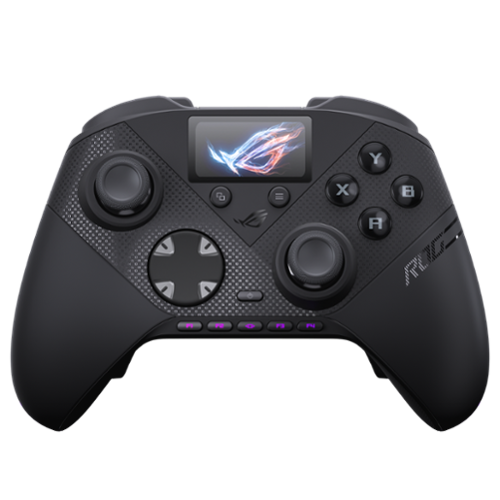
The ROG Raikiri II Pro PC Controller delivers competition-grade 8K polling in wired and 2.4GHz modes, hot-swappable TMR joysticks, dual-mode triggers, micro-switch controls, and a full-color panel. Tri-mode connectivity, customizable rear buttons and bumpers, Gear Link support, and up to 79 hours of battery life enable responsive, personalized PC gaming.
Customer Rating

5
The Standard Which I Now Measure Controllers
on November 18, 2026
Posted by: NAMO
PROS
Slick OLED Display is Customizable
Up to 8k Polling Rate
Buttons Fully Programmable
Gear Link Software is Easy to Configure and Understand
Up to 79hrs of Battery Life
Slick OLED Display is Customizable
Up to 8k Polling Rate
Buttons Fully Programmable
Gear Link Software is Easy to Configure and Understand
Up to 79hrs of Battery Life
NEGATIVES
Will not charge with a Smart USB-C charger
ASUS Companion App not Fully Windows Certified
Needed Major FW Update Prior to First Use
2.4GHz Receiver Interferes With Others
Will not charge with a Smart USB-C charger
ASUS Companion App not Fully Windows Certified
Needed Major FW Update Prior to First Use
2.4GHz Receiver Interferes With Others
SET-UP
The Raikiri 2 continues to use ASUS's newest device-management platform, GearLink. Essentially, it functions as a browser-based configuration interface. I like the GearLink approach because it is comprehensive while remaining easy to navigate and understand. It is one of the simplest and most intuitive configuration utilities I have used to date.
The Raikiri 2 continues to use ASUS's newest device-management platform, GearLink. Essentially, it functions as a browser-based configuration interface. I like the GearLink approach because it is comprehensive while remaining easy to navigate and understand. It is one of the simplest and most intuitive configuration utilities I have used to date.
The latest version of the Raikiri 2 Companion Module currently fails to install properly after the newest Windows update. Windows reports that it cannot verify the publisher and blocks installation for security reasons, even when the module is downloaded directly through GearLink. This suggests a compatibility or certification issue between ASUS and Windows Defender. To ASUS's credit, I own several ROG devices, and this is the first module I have encountered that requires disabling App & Browser Control protections before installation.
USE / LIKES
The Raikiri 2 Pro is an impressive controller. I have used the original Raikiri extensively, and it has remained my primary controller for a long time. The Raikiri 2 Pro builds on everything I liked about the original and improves upon it in meaningful ways.
The Raikiri 2 Pro is an impressive controller. I have used the original Raikiri extensively, and it has remained my primary controller for a long time. The Raikiri 2 Pro builds on everything I liked about the original and improves upon it in meaningful ways.
The micro-switch buttons and TMR joysticks feel smooth, responsive, and premium. Every aspect of the controller delivers a level of precision and refinement that often surpasses competing products in its class.
The most significant addition is the OLED display. While some may view it as a gimmick, I have found it surprisingly useful. Through GearLink, users can configure the display to show various system metrics or display preloaded ROG graphics. Personally, I use it to monitor CPU and GPU temperatures while gaming. Being able to glance down at the controller and immediately check system status is a feature I have come to appreciate.
DISLIKES
My first complaint is that the Raikiri 2 Pro will not charge properly using a smart USB-C charger. For example, my Anker 100W charger detects the controller, but charging never begins because the controller does not properly negotiate power delivery. After more than an hour connected to the charger, the battery level had not increased by a single percent. The controller will reliably charge through a standard USB-C connection or directly from a PC's USB port.
My first complaint is that the Raikiri 2 Pro will not charge properly using a smart USB-C charger. For example, my Anker 100W charger detects the controller, but charging never begins because the controller does not properly negotiate power delivery. After more than an hour connected to the charger, the battery level had not increased by a single percent. The controller will reliably charge through a standard USB-C connection or directly from a PC's USB port.
My second issue is with the included 2.4GHz wireless receiver. In my testing, the Raikiri 2 Pro's dongle interfered with every other wireless receiver connected to my system. I use separate receivers for an ROG keyboard and a non-ASUS mouse, and plugging in the Raikiri 2 Pro receiver caused communication issues with both devices. This is the only wireless receiver I have encountered that exhibits this behavior. Even the receiver from my original Raikiri works alongside the others without issue. I ultimately resolved the problem by using a USB extension cable to provide additional separation between receivers.
Finally, the Companion Module installation issue deserves mention again. Because the software is not currently recognized by Windows, users must disable App & Browser Control protections in Windows Defender before installation can proceed. While this workaround is effective, it may create legitimate security concerns for less experienced users.
FINAL THOUGHTS
The Raikiri 2 Pro is a genuinely impressive controller. The buttons and TMR joysticks feel premium and provide excellent tactile feedback during gameplay. Battery life is strong, polling rates up to 8000Hz will appeal to competitive gamers, and the OLED display adds a distinctive premium touch. While not essential, the display helps set the controller apart from the competition.
The Raikiri 2 Pro is a genuinely impressive controller. The buttons and TMR joysticks feel premium and provide excellent tactile feedback during gameplay. Battery life is strong, polling rates up to 8000Hz will appeal to competitive gamers, and the OLED display adds a distinctive premium touch. While not essential, the display helps set the controller apart from the competition.
Equally important is the GearLink software, which makes customization straightforward and accessible. Nearly every aspect of the controller can be tailored to suit individual preferences.
Having used controllers from nearly every major manufacturer, I believe the Raikiri 2 Pro ranks among the very best currently available. It is not perfect, as the charging limitations, dongle interference, and software certification issues demonstrate. Even so, its combination of build quality, features, customization, and performance make it an easy recommendation.
HIGHLY RECOMMENDED
I would recommend this to a friend!


Share this review:


0points
0of 0voted this as helpful.
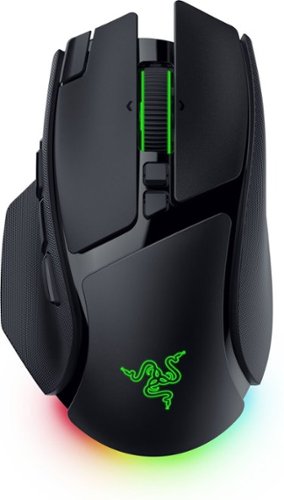
Where immersion meets customization, the Razer Basilisk V4 Pro pushes both further than ever. Engineered with cutting-edge technologies, this wireless ergonomic RGB gaming mouse adapts to your playstyle with unmatched precision, speed, and control. Take command with the Razer HyperScroll Tilt Wheel Gen-2, offering dual tactile modes, ultra-smooth free-spin, and Smart-Reel auto switching for seamless scrolling. Powered by the Razer Focus Pro 50K Optical Sensor Gen-3, enjoy pixel-perfect tracking with 50K DPI, 930 IPS, and Frame Sync for ultra-low latency performance. Play longer with up to 200 hours of battery life on Razer HyperSpeed Wireless Gen-2, delivering fast, stable connectivity with up to 8000 Hz polling in both wired and wireless modes. With 14 programmable controls~including a multi-function trigger, M1 edge button, and 3 side buttons~you have endless macros and commands at your fingertips. Immerse yourself with 7-zone Razer Chroma RGB underglow, customizable from 16.8 million colors and reactive across 300+ games. Built with Razer Optical Mouse Switches Gen-4, experience crisp, responsive clicks rated for over 100 million actuations. Seamlessly connect across your setup with 5-way multi-device support, including HyperSpeed Wireless, Bluetooth, and wired mode~switch instantly between devices with ease.
Customer Rating
5
One of the best gaming mice to date.
on November 4, 2026
Posted by: NAMO
TLDR: Highly Customizable Mouse with Premium Build Quality
PROS:
50,000 DPI sensitivity
Single-DPI level adjustability
Up to 200 hours of battery life with HyperSpeed Wireless
Up to 275 hours of battery life with Bluetooth
"Perfect 180" feature in supported games
Buttery-smooth optical switches
50,000 DPI sensitivity
Single-DPI level adjustability
Up to 200 hours of battery life with HyperSpeed Wireless
Up to 275 hours of battery life with Bluetooth
"Perfect 180" feature in supported games
Buttery-smooth optical switches
CONS:
Wireless charging adds noticeable weight
12 buttons can be excessive for some users
Wireless charging adds noticeable weight
12 buttons can be excessive for some users
SETUP
I've gone to painstaking lengths in my previous Razer reviews explaining how much I disliked the Synapse software. I'm happy to report that the newest version of Synapse significantly improves responsiveness.
I've gone to painstaking lengths in my previous Razer reviews explaining how much I disliked the Synapse software. I'm happy to report that the newest version of Synapse significantly improves responsiveness.
Synapse 4 now takes about 30% less time to load, and the entire program feels much less resource-intensive than previous versions. Razer has done an excellent job improving the software and making it more user- and PC-friendly. It is no longer my least favorite configuration software.
Good job, Razer. It's much appreciated.
USE
There is so much to talk about with the new Basilisk V4 Pro that I could go into exhaustive detail. However, it all boils down to one thing: Razer has pulled out all the stops when it comes to mouse design and packed the Basilisk V4 Pro with nearly every customization option imaginable. In fact, some of the customization features were things I never even considered customizable.
There is so much to talk about with the new Basilisk V4 Pro that I could go into exhaustive detail. However, it all boils down to one thing: Razer has pulled out all the stops when it comes to mouse design and packed the Basilisk V4 Pro with nearly every customization option imaginable. In fact, some of the customization features were things I never even considered customizable.
Virtually every feature of the Basilisk V4 Pro can be customized. The scroll wheel, button assignments, lighting, polling rate, sensitivity, and much more can all be tailored to your preferences. Three features stand out the most to me.
First, the Razer optical switches are next-level. They feel buttery smooth, precise, and effortless to use.
Second, Razer's new 50,000 DPI sensor is fantastic. Using Synapse, users can fine-tune sensitivity down to a single DPI increment. This level of precision is virtually unmatched. Most competitors allow sensitivity adjustments, but none that I'm aware of offer such fine-grained control. No more being limited to 100, 200, or 500 DPI increments. You can literally adjust the Basilisk one DPI at a time.
Third, the feature that has helped me more than I care to admit is Razer's "Perfect 180." In supported games, users can assign one of the mouse's programmable buttons to instantly perform a perfect 180-degree turn.
For FPS games, this feature can be a game-changer. It's much harder for opponents to catch you off guard, and even if they do, you don't have to waste precious time spinning around manually. Press your assigned button, and you're immediately facing the threat. For players with average or below-average reaction times like me, it's surprisingly helpful.
CONS
First, my son thinks the Basilisk is too heavy. He's accustomed to ultra-light gaming mice. Personally, I think the Basilisk is close to the perfect weight. I'm not a fan of ultra-light models, but I also wouldn't want to add the wireless charging puck. That would probably make the mouse too heavy even for my preferences.
First, my son thinks the Basilisk is too heavy. He's accustomed to ultra-light gaming mice. Personally, I think the Basilisk is close to the perfect weight. I'm not a fan of ultra-light models, but I also wouldn't want to add the wireless charging puck. That would probably make the mouse too heavy even for my preferences.
Second, with so many programmable buttons available, I occasionally forget which button is assigned to which function. There was definitely a learning curve, or perhaps more accurately, a memorization curve. I don't even have all 12 buttons programmed, and it can still be confusing at times.
FINAL THOUGHTS
Would I recommend the Basilisk V4 Pro? Absolutely.
Would I recommend the Basilisk V4 Pro? Absolutely.
It's one of the best gaming mice I've used in a long time. I've owned several Razer mice over the years, and some have definitely fallen short of expectations. I'm happy to report that the Basilisk V4 Pro is not one of them.
Every aspect of the device feels premium, thoughtfully designed, and highly refined.
HIGHLY RECOMMENDED
I would recommend this to a friend!


Share this review:


0points
0of 0voted this as helpful.
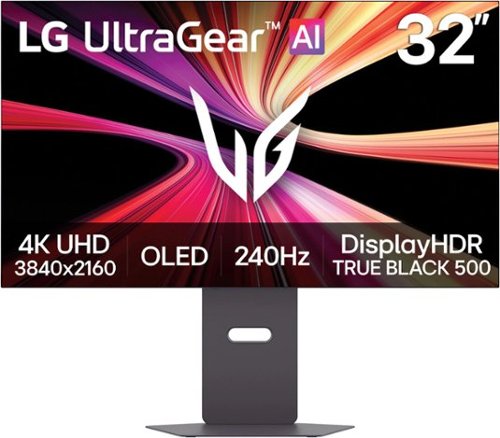
Experience elite gaming performance on a 32" 4K UHD OLED display (3840~2160) with over 8 million pixels for sharp detail, deep contrast, and vivid color. UltraGear evo~s built-in processor enhances content with AI Upscaling~ toward 4K clarity~no GPU upgrade required. Dual Mode lets you switch between UHD 240Hz for cinematic gameplay or FHD 480Hz for ultra-fast competitive performance.~ 4th Gen Primary RGB Tandem OLED delivers improved brightness, efficiency, and vivid color, validated by UL-verified Perfect Black, Perfect Color, and Perfect Reproduction.~ VESA DisplayHDR True Black 500, 1.5M:1 contrast, and up to 98.5% DCI-P3 bring games to life with rich blacks and accurate detail. With 140 PPI, text and HUD elements stay crisp for both gaming and everyday use. A near-instant 0.03ms (GtG) response time and NVIDIA G-SYNC Compatible~ and AMD FreeSync Premium Pro ensure smooth, tear-free gameplay. Connectivity includes DisplayPort 2.1~(UHBR20), HDMI 2.1, and USB Type-C with 90W power delivery. AI-powered sound and picture optimization enhance every scene.
Customer Rating

4
Good Warranty / Includes Speakers / Up to 480Hz
on October 29, 2026
Posted by: NAMO
TL;DR: 4K at 240Hz or 1080p at 480Hz with bright, vibrant colors and deep OLED blacks.
PROS
Up to 1300 nits peak brightness
LG Self-Calibration Tool
Built-in speakers
NVIDIA G-SYNC and AMD FreeSync Premium Pro compatible
Excellent anti-glare coating that effectively reduces reflections
2-year warranty, including OLED panel coverage
Up to 1300 nits peak brightness
LG Self-Calibration Tool
Built-in speakers
NVIDIA G-SYNC and AMD FreeSync Premium Pro compatible
Excellent anti-glare coating that effectively reduces reflections
2-year warranty, including OLED panel coverage
CONS
Built-in speakers sound poor
OSD thumb stick would be more convenient on the bottom of the monitor
Falls slightly short of 100% DCI-P3 coverage
Color accuracy levels on blue and red channels
Built-in speakers sound poor
OSD thumb stick would be more convenient on the bottom of the monitor
Falls slightly short of 100% DCI-P3 coverage
Color accuracy levels on blue and red channels
CONNECTIONS
1 x DisplayPort 2.1
2 x HDMI 2.1
1 x USB-C with Power Delivery
1 x 3.5mm headphone jack
1 x DisplayPort 2.1
2 x HDMI 2.1
1 x USB-C with Power Delivery
1 x 3.5mm headphone jack
SETUP
I chose to connect the monitor using USB-C through my PC's Thunderbolt port. Once connected, the display prompts you to install LG's monitor software. While I'm generally not a fan of manufacturer utilities, the software is functional and easy to use. During setup, users can also install the LG Switch app and Calibration Studio software. I installed both.
I chose to connect the monitor using USB-C through my PC's Thunderbolt port. Once connected, the display prompts you to install LG's monitor software. While I'm generally not a fan of manufacturer utilities, the software is functional and easy to use. During setup, users can also install the LG Switch app and Calibration Studio software. I installed both.
The LG Switch app provides a convenient way to toggle between 4K mode for productivity and 1080p Dual Mode for competitive gaming. While Dual Mode can also be activated using the monitor's rear thumb stick, its placement feels awkward and somewhat cumbersome. The software solution is significantly more convenient.
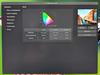
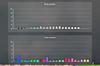
I'm also a big fan of LG's built-in calibration software. More manufacturers should include this feature. The software immediately recognized my i1 Display Pro and began the calibration process without issue. It handled most of the color adjustments automatically, saving a considerable amount of time and effort compared to a manual calibration.
USE
For everyday productivity, this is an outstanding 4K display. Colors are rich and vibrant, while the 32-inch panel delivers excellent pixel density, resulting in sharp text and crisp images. LG's anti-glare coating performed especially well at reducing ambient reflections. I didn't fully appreciate its effectiveness until I switched to a laptop for a quick task and immediately noticed how much more glare the laptop screen exhibited. The difference was substantial.
For everyday productivity, this is an outstanding 4K display. Colors are rich and vibrant, while the 32-inch panel delivers excellent pixel density, resulting in sharp text and crisp images. LG's anti-glare coating performed especially well at reducing ambient reflections. I didn't fully appreciate its effectiveness until I switched to a laptop for a quick task and immediately noticed how much more glare the laptop screen exhibited. The difference was substantial.
Using the LG Switch app, the monitor can lower its resolution to 1080p while increasing the refresh rate from 240Hz to an impressive 480Hz. Combined with NVIDIA G-SYNC and AMD FreeSync Premium Pro support, gaming performance was exceptionally smooth with no noticeable tearing or visual artifacts. Whether playing first-person shooters or racing simulators, the monitor remained responsive and artifact-free.
NEGATIVES
First, while I appreciate the inclusion of built-in speakers, their audio quality is disappointing. More disappointing than normal monitor speakers. Dialogue sounds thin and somewhat distorted, making YouTube videos, news broadcasts, and other spoken content less enjoyable than they should be. They are functional in a pinch, but most users will likely prefer dedicated speakers or a headset.
First, while I appreciate the inclusion of built-in speakers, their audio quality is disappointing. More disappointing than normal monitor speakers. Dialogue sounds thin and somewhat distorted, making YouTube videos, news broadcasts, and other spoken content less enjoyable than they should be. They are functional in a pinch, but most users will likely prefer dedicated speakers or a headset.
Second, LG's calibration software was not able to completely correct the monitor's color accuracy. My testing still showed Delta E errors above 2 in the blue and red channels. While most users will never notice this issue, photographers, video editors, and other content creators may find it relevant. To be fair, this testing was conducted on a nearly new panel with less than an hour of use, so additional panel break-in time may improve results.
The monitor also covers approximately 98.5% of the DCI-P3 color space. While that is a strong result for gaming and general use, it does fall slightly short of the full DCI-P3 coverage offered by some premium professional displays.
FINAL THOUGHTS
There is a lot to like about this monitor. It delivers excellent brightness, deep OLED blacks, impressive clarity, and a highly effective anti-glare coating. LG further strengthens the package with a two-year warranty that includes OLED panel coverage and pixel-cleaning support, which is becoming increasingly uncommon in the OLED market.
There is a lot to like about this monitor. It delivers excellent brightness, deep OLED blacks, impressive clarity, and a highly effective anti-glare coating. LG further strengthens the package with a two-year warranty that includes OLED panel coverage and pixel-cleaning support, which is becoming increasingly uncommon in the OLED market.
The Dual Mode feature is particularly impressive. Being able to switch between 4K/240Hz and 1080p/480Hz with a few clicks makes the monitor equally comfortable for productivity work and competitive gaming. It's a thoughtful feature that adds real value rather than serving as a marketing gimmick.
The lack of full DCI-P3 coverage and slightly elevated Delta E values prevent it from being an automatic recommendation for professional color-critical work. However, for gamers and users looking for a premium display that excels in both productivity and entertainment, this monitor is a very good option.
Verdict: Recommended
This is a good all-around OLED gaming monitor with exceptional gaming performance, strong brightness, effective anti-glare technology, and useful software features. While content creators may want greater color accuracy, most users will find very little to complain about. For gaming, general productivity, and mixed-use scenarios, it is easy to recommend.
I would recommend this to a friend!


Share this review:


0points
0of 0voted this as helpful.
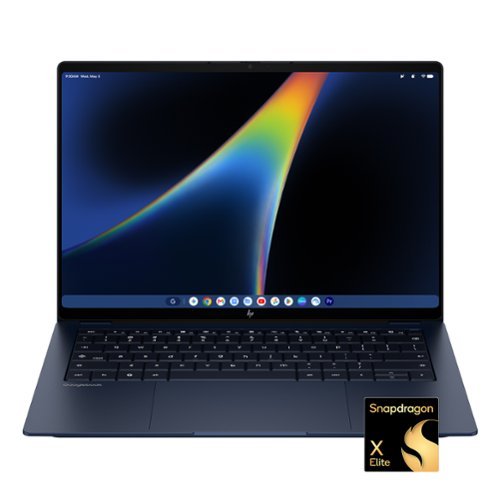
The HP Googlebook 14 is a thin, lightweight laptop designed for Gemini Intelligence and seamless use with an Android phone. Its Snapdragon X Elite processor supports responsive everyday work, while the 14-inch design is suited to school, hybrid work, streaming, and staying productive on the go.
Customer Rating
4
Fast, Snappy with Excellent Battery Life
on October 14, 2026
Posted by: NAMO
TLDR: For those fully into the Google ecosystem. For all others, not sure how these really fit in.
PROS
Excellent battery life
Premium build quality
Sharp, vibrant OLED display
Excellent thermals
Nearly seamless setup with an Android phone
Excellent battery life
Premium build quality
Sharp, vibrant OLED display
Excellent thermals
Nearly seamless setup with an Android phone
CONS
Expensive
An unusual and somewhat ambitious entry into the laptop segment
Expensive
An unusual and somewhat ambitious entry into the laptop segment
SETUP
I was pleasantly surprised by how easy the Googlebook was to set up. The process felt very familiar, as it's configured much like an Android phone. In many ways, that's exactly what it is. Aside from lacking a dedicated cellular modem and SIM card, the Googlebook is essentially an Android phone transformed into a laptop.
I was pleasantly surprised by how easy the Googlebook was to set up. The process felt very familiar, as it's configured much like an Android phone. In many ways, that's exactly what it is. Aside from lacking a dedicated cellular modem and SIM card, the Googlebook is essentially an Android phone transformed into a laptop.
The Googlebook functions as a natural extension of your Android device, helping bridge the gap between a smartphone and a traditional laptop. With a simple QR code scan and both devices connected to the same Wi-Fi network, the Googlebook quickly syncs with your phone, allowing access to text messages, photos, shared apps, and other connected features.
USE
I've been using the Googlebook for quite some time and intentionally delayed writing this review. Why? Because I'm still somewhat conflicted.
I've been using the Googlebook for quite some time and intentionally delayed writing this review. Why? Because I'm still somewhat conflicted.
There is a lot to like about this laptop, but there are also enough rough edges that I'm not entirely convinced it's a complete replacement for a traditional Windows machine.
Performance, however, is not one of those concerns. The system feels remarkably fast and responsive. Powered by a 12-core Snapdragon X Elite processor, 16GB of RAM, and a 512GB SSD, the Googlebook handles everyday tasks with ease. Nearly every app available on Android is available here, and users can even cast apps directly from their phone to the laptop.
The 3K OLED display is another standout feature. At 14 inches, the resolution delivers exceptionally sharp text and crisp graphics. Blacks are deep, colors are vibrant, and the touchscreen is both accurate and highly responsive. It's easily one of the best aspects of the overall experience.
NEGATIVES
Although the Googlebook shows a lot of promise, the operating system still feels a bit rough around the edges. It reminds me of the early days of ARM-based Windows laptops. The foundation is solid, but small usability issues occasionally get in the way.
Although the Googlebook shows a lot of promise, the operating system still feels a bit rough around the edges. It reminds me of the early days of ARM-based Windows laptops. The foundation is solid, but small usability issues occasionally get in the way.
One example is the keyboard backlight. While it can be enabled, the setting does not remain active after shutting down the laptop. Each time the system restarts, the backlight must be manually turned on again. There doesn't appear to be an option to permanently enable it, as there is no BIOS or system settings.
I also encountered issues during the initial setup process. The system prompted me to install popular applications such as Netflix, Prime Video, Paramount+, and Amazon, but every download failed. To resolve the issue, I had to complete the setup, restart the laptop, and then manually download each app from the app store. It wasn't a major problem, but it certainly wasn't the smooth onboarding experience I expected.
App optimization is another area that still needs work. While many applications have been adapted for larger screens and work exceptionally well, others feel like stretched-out phone apps. The optimized applications look and perform great, but those still designed primarily for smartphones can deliver a somewhat underwhelming experience on a laptop display.
FINAL THOUGHTS
Would I recommend the Googlebook? That's a difficult question.
Would I recommend the Googlebook? That's a difficult question.
If you're heavily invested in Google's ecosystem, use an Android phone, and rely on Google's suite of apps and services, then the Googlebook makes a lot of sense. The integration between devices is seamless and creates a connected experience that few competitors can match.
On the other hand, gamers should probably look elsewhere. The Googlebook lacks a dedicated graphics processor, which means modern PC games are largely off the table. While mobile games from the Play Store run fine, you won't be loading up the latest AAA PC titles.
What impresses me most is how much of a leap forward this device represents compared to traditional Chromebooks. The experience feels more cohesive, more capable, and far more integrated into Google's ecosystem. Rather than feeling like a lightweight web device, the Googlebook serves as a legitimate extension of your smartphone while still offering many of the benefits of a traditional laptop.
The Googlebook is unquestionably more capable than any Chromebook I've used before. However, there are still enough software annoyances and compatibility concerns that I while I do recommend it to the right audience, it isn’t without some reservations. To Google's credit, though, new platforms often go through growing pains. We saw similar issues when ARM-based laptops first entered the consumer market, and many of those challenges were eventually resolved.
Overall, the Googlebook feels like a product with tremendous potential. It's already very good in several key areas, but with a little more polish and continued software refinement, it could become something truly exceptional.
I would recommend this to a friend!
Share this review:


+1point
2of 3voted this as helpful.
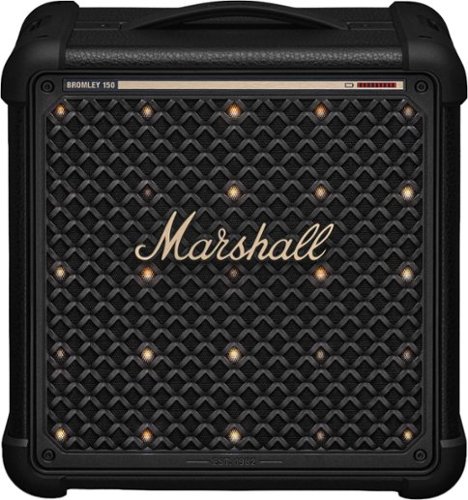
Bromley 150 is our most portable party speaker, made to bring big powerful sound anywhere. We built the compact cabinet with an integrated control panel and added a grab-and-go handle for maximum flexibility, no matter the conditions. With all-day-and-night playtime, lights that feel like a live show, and mic and instrument inputs, it can turn any remote location into a venue. When you want to throw a party in no time, Bromley 150 always delivers.
Customer Rating
5
This Thing Can Belt Out Some Tunes
on October 11, 2026
Posted by: NAMO
TLDR: Big & Heavy. Best suited for hard rock and hip-hop, but makes a statement that few portable speakers can
PROS
Huge Sound
Big Woofers = Big Bass
Multiple Input Options
Premium Looks
Removable & Replaceable Battery
Huge Sound
Big Woofers = Big Bass
Multiple Input Options
Premium Looks
Removable & Replaceable Battery
CONS
Big Size
Heavy Weight
Doesn't Support Spatial Audio
Big Size
Heavy Weight
Doesn't Support Spatial Audio
INPUTS / OUTPUTS
2 x 1/4" XLR Mic / Headphone
1 x 3.5mm
USB-C In / Out (Supports 5V Charging Out)
1 x 3.5mm Out for Daisy Chaining
2 x 1/4" XLR Mic / Headphone
1 x 3.5mm
USB-C In / Out (Supports 5V Charging Out)
1 x 3.5mm Out for Daisy Chaining
MARSHALL APP
The Marshall app is an exercise in simplicity. A breath of fresh air. It is stripped down and simple. It doesn't aim to be your one-stop shop for all your media. A simple app to connect, change inputs, and perform basic controls. I like the approach. I prefer to use my music streaming app for playback control and EQ. Marshall has acknowledged this with their app, making only the necessary controls within it.
The Marshall app is an exercise in simplicity. A breath of fresh air. It is stripped down and simple. It doesn't aim to be your one-stop shop for all your media. A simple app to connect, change inputs, and perform basic controls. I like the approach. I prefer to use my music streaming app for playback control and EQ. Marshall has acknowledged this with their app, making only the necessary controls within it.
SOUND QUALITY
I won't say that the Bromley is elegant and refined. It is unapologetically bold and brash. The Bromley is in its element when you want big, room-filling sound, preferably rock and/or hip-hop. Not that it can't do other genres, as I played a bunch of country through it. The Bromley handled country music well, but it really comes into its own when you feed it some hard rock.
I won't say that the Bromley is elegant and refined. It is unapologetically bold and brash. The Bromley is in its element when you want big, room-filling sound, preferably rock and/or hip-hop. Not that it can't do other genres, as I played a bunch of country through it. The Bromley handled country music well, but it really comes into its own when you feed it some hard rock.
Hard rock, hair metal, hip-hop, it doesn't matter. These genres wake the Bromley up and allows it to show its true potential. Big, booming bass that fills a room with authority. Far better than any other Bluetooth speaker I've used in a long while. The Bromley performs as well as other competitors' speakers that are twice the size. I credit a good portion of this from the fact the Bromley has a rearward firing radiator and active full-range driver. This not only helps with bass response, but allows music to be bounced off walls behind the speaker help filling the room with a more realistic 360 degree soundstage.
BATTERY LIFE
Marshall claims 40+hrs of battery life. I'm not sure I'll make 40hrs, but I've been listening for several hours now and the battery is holding up nicely. One point that Marshall deserves credit for, is that the Bromley has a replaceable battery! If for some reason that 40hrs of battery life isn't enough, buyers can purchase an additional battery to have on hand to swap out when one gets low! Awesome!
Marshall claims 40+hrs of battery life. I'm not sure I'll make 40hrs, but I've been listening for several hours now and the battery is holding up nicely. One point that Marshall deserves credit for, is that the Bromley has a replaceable battery! If for some reason that 40hrs of battery life isn't enough, buyers can purchase an additional battery to have on hand to swap out when one gets low! Awesome!
BUILD QUALITY / ASTHETICS
Like other Marshall products, the Bromley has a very premium feel compared to its competitors. The signature Marshall black and gold color scheme is swanky looking. Controls are equally premium feelings. I would venture to call the Bromley just short of ruggedized. Common wear spots are covered in easily replaceable parts. Buyers won't have to worry about being delicate with their Bromley. Rubber end caps, battery compartment covers, etc. are all replaceable through Marshall's website. I like this approach to speaker design. I wish more manufacturers followed suite.
Like other Marshall products, the Bromley has a very premium feel compared to its competitors. The signature Marshall black and gold color scheme is swanky looking. Controls are equally premium feelings. I would venture to call the Bromley just short of ruggedized. Common wear spots are covered in easily replaceable parts. Buyers won't have to worry about being delicate with their Bromley. Rubber end caps, battery compartment covers, etc. are all replaceable through Marshall's website. I like this approach to speaker design. I wish more manufacturers followed suite.
FINAL THOUGHTS
I'm having a bunch of fun with the Bromley. More than I thought I would. One thing that I'm particularly enjoying is pairing the Bromley to my Roku stick and using it as a portable movie speaker. Movies sound great on the Bromley and make outdoor movie nights way more fun. Actually more fun than my other Bluetooth speakers.
I'm having a bunch of fun with the Bromley. More than I thought I would. One thing that I'm particularly enjoying is pairing the Bromley to my Roku stick and using it as a portable movie speaker. Movies sound great on the Bromley and make outdoor movie nights way more fun. Actually more fun than my other Bluetooth speakers.
Is the Bromley the most delicate and sonically accurate speaker on the market? Oh, no. Far from it. But it makes up for it in shear power and its fun factor. The Bromley puts most other, bigger party speakers to shame. I'm having a blast with the Bromley. More fun than I've had with any Bluetooth, portable speaker I've used in a long time, and that's what it's all about.
HIGHLY RECOMMENDED
I would recommend this to a friend!

Share this review:


0points
0of 0voted this as helpful.
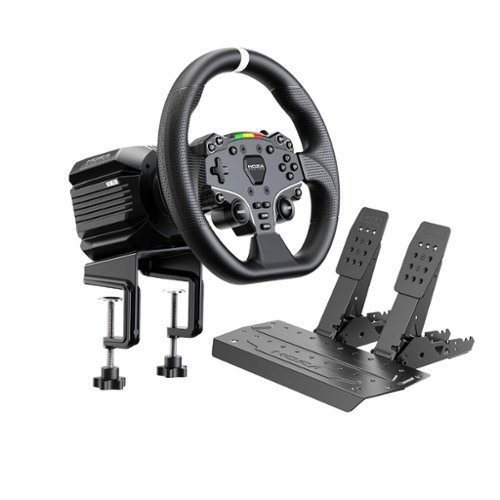
Building on the proven MOZA R5 Bundle, the R5 Pro Bundle elevates the complete direct drive experience with enhanced 6 Nm torque, an ultra-precise 21-bit magnetic encoder, a 600 MHz high-performance CPU, and MOZA NexGen Force Feedback Algorithm 5.0. Paired with the ES Lite steering wheel and SR-P Lite2 two-pedal set, it delivers more detailed road feel, faster response, and smoother torque transitions in a compact, ready-to-race package. Fine-tune your setup through MOZA Pit House or the MOZA Racing App.
Customer Rating
5
Subtle, but Meaningful Refinements to Standard R5
on October 9, 2026
Posted by: NAMO
TLDR: Better than the R5, but not enough to warrant replacing a standard R5
PROS
Faster Processing Power
64x Resolution over Standard Model
More Realism in Force Feedback Haptics
Direct Drive Precision & Response
A lot of Customization Possibilities
Faster Processing Power
64x Resolution over Standard Model
More Realism in Force Feedback Haptics
Direct Drive Precision & Response
A lot of Customization Possibilities
CONS
Generational Improvement
Increase In Torque Unnoticeable over Standard R5
Generational Improvement
Increase In Torque Unnoticeable over Standard R5
INSTALLATION
Moza includes a set of clamps, and the pedal set has some grip on the bottom, so buyers could easily mount the R5 to a desk and sit in an office chair, but let's be honest, the real immersion is from a racing sim and nothing else compares.
Moza includes a set of clamps, and the pedal set has some grip on the bottom, so buyers could easily mount the R5 to a desk and sit in an office chair, but let's be honest, the real immersion is from a racing sim and nothing else compares.
There are quite a few components to install with the wheel and pedal kit. But, with my sim rig, there was nothing that a few zip-ties and included mounting hardware couldn't fix and make tidy. Overall installation time took nearly an hour, but most of that time was spent hiding wires and making everything neat and tidy.
SOFTWARE
I have mixed views on the Moza Pit House software. It works well and offers a great deal of customization. Buyers can tailor the "application curves" of the pedals, making them linear, progressive, aggressive, or relaxed. Wheel customizations include button mapping, torque delivery, degrees of rotation, LED light pattern, etc.
I have mixed views on the Moza Pit House software. It works well and offers a great deal of customization. Buyers can tailor the "application curves" of the pedals, making them linear, progressive, aggressive, or relaxed. Wheel customizations include button mapping, torque delivery, degrees of rotation, LED light pattern, etc.
The amount of customization to the Moza Pit House software is extensive and can be a bit intimidating for first-time users. But, with a bit of tweaking, allows the R5 to be tailored to the end user's preference. Some of it requires a bit of trial and error, but the options are generous.
One thing that I dislike is that I always get a bit apprehensive when it comes to software and firmware updates with the Pit House. Why? Because the Pit House software seems like it is straight out of Windows 95. To be fair to Moza, it hasn't let me down yet, but there are times it seems to be questionable.
PERFORMANCE
I've tried wheel & pedal combos from different manufacturers and at the end of the day, I come back to Moza products over their primary competitor. I like the feel and performance of their products better than the competition.
I've tried wheel & pedal combos from different manufacturers and at the end of the day, I come back to Moza products over their primary competitor. I like the feel and performance of their products better than the competition.
The R5 Pro makes racing even more enjoyable compared to the standard model. The faster CPU and higher resolution of the Pro model makes games more enjoyable. I liked the standard R5, but the Pro takes everything I like about the standard version and refines the whole experience.
Rumble strips, track edges, wheel spin, tire lockup, the R5 Pro is more realistic than the standard model. I liked the standard model but am pleasantly surprised at the refinement of the Pro model. It makes on-screen antics far more believable and realistic.
CONCLUSION
The Moza R5 Pro provides a realistic racing experience at a reasonable price. It improves upon the standard R5 in every area. More realism. More immersion. More Precision. I find the R5 Pro makes it easier to determine subtle changes happening in a race before I could with the standard model. The refinements in the Moza algorithm and CPU resolution make a noticeable difference allowing subtle changes to be more discernible versus the standard version in which haptics and feedback are broader and more gross with less refinement.
The Moza R5 Pro provides a realistic racing experience at a reasonable price. It improves upon the standard R5 in every area. More realism. More immersion. More Precision. I find the R5 Pro makes it easier to determine subtle changes happening in a race before I could with the standard model. The refinements in the Moza algorithm and CPU resolution make a noticeable difference allowing subtle changes to be more discernible versus the standard version in which haptics and feedback are broader and more gross with less refinement.
While I'm not sure I'd replace my existing R5 for an R5 Pro, I would definitely get the Pro model over the standard if buying.
RECOMMENDED
I would recommend this to a friend!


Share this review:


0points
0of 0voted this as helpful.
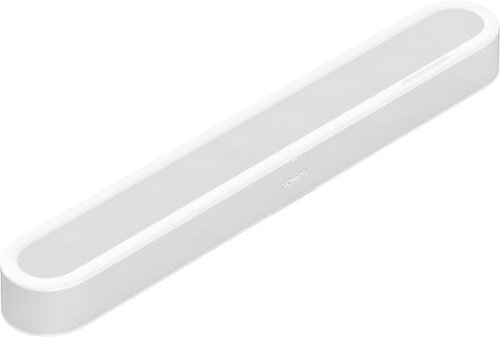
A compact soundbar with true 7.1.2 Dolby Atmos. Nine drivers, including dedicated upfiring channels, surround you with immersive sound from every direction. AI Speech Enhancement keeps dialogue clear. A new acoustic architecture delivers deeper bass and greater detail for movies, TV, and music. Control by app, TV remote, AirPlay 2, or voice. Part of the Sonos system. Expand anytime.
Customer Rating
5
Big, Generational Improvements in Audio
on October 3, 2026
Posted by: NAMO
TLDR: Big, Room Filling Sound from a Tiny Soundbar.
PROS
7.1.2 Surround Sound
Dedicated Up Firing Drivers
Clear, Crisp Audio
Compatible with Other Generations of Sonos Speakers
7.1.2 Surround Sound
Dedicated Up Firing Drivers
Clear, Crisp Audio
Compatible with Other Generations of Sonos Speakers
CONS
Sonos App
Not Remote Control Friendly
CEC Needs Improvement
Sonos App
Not Remote Control Friendly
CEC Needs Improvement
CONNECTIONS
1 x Power
1 x HDMI eARC
1 x USB-C
1 x Power
1 x HDMI eARC
1 x USB-C
SET-UP
The Beam Ultra is configured via Sonos' controversial app. I've owned Sonos products for years and I will say that initial configuration and addition of Sonos products is pretty straight forward, but after that, the Sonos app is a difficult mess. The Beam Ultra was immediately recognized on my Android phone and was added and updated in a matter of minutes. It was easy to update, add to a new room, and even to add some existing Sonos products, like my Gen 3 sub, to my Family Room. I like the Sonos set-up process. Actual app use is a whole other story. However, we are here for the Beam, not listen to me whine about an app.
The Beam Ultra is configured via Sonos' controversial app. I've owned Sonos products for years and I will say that initial configuration and addition of Sonos products is pretty straight forward, but after that, the Sonos app is a difficult mess. The Beam Ultra was immediately recognized on my Android phone and was added and updated in a matter of minutes. It was easy to update, add to a new room, and even to add some existing Sonos products, like my Gen 3 sub, to my Family Room. I like the Sonos set-up process. Actual app use is a whole other story. However, we are here for the Beam, not listen to me whine about an app.
SOUND QUALITY
As I stated above, the Beam Ultra is being placed in my family room. It is replacing a soundbar/surround combo from a major TV manufacturer. My current soundbar was acceptable, but I was never fully blown away. The more I've used it, the more I see its shortcomings. Even with dedicate surround speakers, I never found the audio convincing and enveloping. Not to mention, while audio was acceptable, it was never particularly clear and/or convincing.
As I stated above, the Beam Ultra is being placed in my family room. It is replacing a soundbar/surround combo from a major TV manufacturer. My current soundbar was acceptable, but I was never fully blown away. The more I've used it, the more I see its shortcomings. Even with dedicate surround speakers, I never found the audio convincing and enveloping. Not to mention, while audio was acceptable, it was never particularly clear and/or convincing.
Prior to installation, I watched a movie with my existing set-up, streaming it in 4k and Dolby Atmos. Afterward, I pulled out my existing system and installed the Beam Ultra. After updating the Sonos, running the room correction algorithm, and setting it up for my TV controls, I queued the same movie up again. Skipping immediately to the good, action sequences to see if there was any discernible difference between the Beam Ultra and my existing soundbar/surround system.
The differences in audio quality were immediately apparent. I was surprised at just how much the audio had improved. Voices were noticeably clearer and more intelligible. The amount of bass was improved as well, even before adding my Sonos Gen 3 sub to the system. Most importantly, the Beam Ultra's surround and Atmos audio was noticeably more present and convincing. The Sonos does a very good job at processing its Atmos audio. Adding those 2 up-firing tweeters to the Beam makes for a much more enveloping soundstage. I have to admit that even without dedicated surrounds, my Beam Ultra outperforms my existing soundbar/surround combo in Atmos-enabled movies. Frankly, I would never have believed at how much better and more realistic the Atmos soundstage is now, if I hadn't witnessed it in person.
NEGATIVES
First. The Sonos app is still a hot mess. Like I said above, it is easy to add a new product to your system. After that, the app just tries to do too much. It wants to be your one-stop shop for audio, video, etc. I don't like it and don't want it. Just give me an app that controls my devices. It is frustrating. For example, it took me nearly 5 minutes to figure out how to switch back to my HDMI input from Amazon Music. It just isn't logically laid out.
First. The Sonos app is still a hot mess. Like I said above, it is easy to add a new product to your system. After that, the app just tries to do too much. It wants to be your one-stop shop for audio, video, etc. I don't like it and don't want it. Just give me an app that controls my devices. It is frustrating. For example, it took me nearly 5 minutes to figure out how to switch back to my HDMI input from Amazon Music. It just isn't logically laid out.
Second. The Sonos system isn't universally supported like most other soundbar/surround combos are. Luckily, my TV will control the Sonos volume, but none of my streaming device remotes, nor my TV remote will control the Beam Ultra's power. I've tried 3 different remotes, from 3 different manufacturers. None were successful. At least the volume functions properly via the TV.
Third. CEC still needs some attention. My existing soundbar/surround combo was controlled properly via the HDMI-eARC CEC protocol. Volume, power, etc. it was handled properly. Not with this Sonos system. None of my remotes control power. Sonos' troubleshooting section of their website says the system never truly shuts off, only enters a low power state. I'm not sure this is the case with mine or not, as I notice no change in the LED indicators. Sonos needs to provide additional support for CEC protocols and remotes.
FINAL THOUGHTS
Sonos bills the Beam Ultra suitable for TVs up to 65". I understand why. I have it mounted under my 98" TV and it does look odd. It is a very compact package. Yes, the Sonos looks absolutely tiny under my TV, but as soon as I queue up a good show or movie, I could care less. This Beam Ultra alone handily outperforms the more expensive soundbar/surround combination I had been using.
Sonos bills the Beam Ultra suitable for TVs up to 65". I understand why. I have it mounted under my 98" TV and it does look odd. It is a very compact package. Yes, the Sonos looks absolutely tiny under my TV, but as soon as I queue up a good show or movie, I could care less. This Beam Ultra alone handily outperforms the more expensive soundbar/surround combination I had been using.
Props to Sonos for including compatibility with older Sonos products. Buyers can start with a Beam Ultra and then add, or even repurpose, most existing products, like I did with my gen 3 Sub. The Sonos app makes it easy to add and configure speakers. Adding a sub and surrounds is easy and straightforward. The room correction algorithm makes it easy and pain-free to tune the entire system regardless of layout and placement.
The Beam Ultra is definite improvement to the Beam line of speakers. More drivers, more amps, more realistic and enveloping surround. Audio is crisp and clear. There is punchy bass and the new, up-firing drivers provide a realistic Dolby Atmos surround effect.
HIGHLY RECOMMENDED
I would recommend this to a friend!



Share this review:


0points
0of 0voted this as helpful.
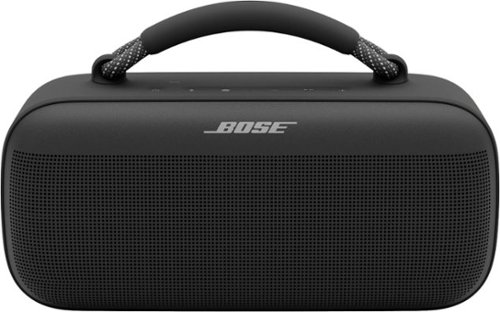
Whether you~re the go-to DJ in your crew or a curator with the best playlists, the Bose SoundLink Max SE Portable Speaker is the ultimate party starter. The stereo sound and deep bass turn good times to the max, letting you feel the music from your head to your toes. And with a removable grab-and-go handle, you can take the party anywhere. Water and dustproof features mean it~s perfect for a poolside, beach, or rooftop hang. And when someone spills a drink or you run into unexpected showers, it never knocks the vibe. Thanks to the epic battery life, you can keep bumping the playlist for up to 16 hours*, so the party can start in the day and carry on through the late night.
Customer Rating
5
Sounds Larger Than Its Size
on September 29, 2026
Posted by: NAMO
TLDR: Big Bose sound in a small package
PROS
Exceptional Bass For Its Size
Up to 20hrs Playback
Can Charge Phone During Playback
IP67 Weatherproofing
Linkable To Form Stereo Pair
Exceptional Bass For Its Size
Up to 20hrs Playback
Can Charge Phone During Playback
IP67 Weatherproofing
Linkable To Form Stereo Pair
CONS
Does Not Support Lossless Audio
Does Not Support Spatial Audio
Limited EQ Controls within Bose App
Does Not Support Lossless Audio
Does Not Support Spatial Audio
Limited EQ Controls within Bose App
BOSE APP
The Bose app is a marvel in simplicity. Refreshingly so. There are very limited options within the app and that is a good thing. The Bose app doesn't act like their competitors' apps, where the app tries to be a one size fits all and attempts to do everything. Honestly, this is really how I would prefer it. I would rather use my dedicated music app (in my case Amazon Music) for playback and control. I wish others would adopt Bose's approach. Just give me what I need.
The Bose app is a marvel in simplicity. Refreshingly so. There are very limited options within the app and that is a good thing. The Bose app doesn't act like their competitors' apps, where the app tries to be a one size fits all and attempts to do everything. Honestly, this is really how I would prefer it. I would rather use my dedicated music app (in my case Amazon Music) for playback and control. I wish others would adopt Bose's approach. Just give me what I need.
One part of the Bose app that I don't like though, is the EQ section. There are just 4 adjustments, bass and treble boost & reduce. Honestly, it would be better if Bose just omitted it. I know why they did what they did, it goes back to my previous paragraph of simplicity. This is one area where they could give a few more options. Luckily, my music app has plenty of EQ settings to customize sound output.
SOUND QUALITY
Bose's redesigned products and drivers are marked improvements over products in years past. The SoundLink Max is no exception. Audio quality is very pleasing. There is a surprising amount of punchy bass that comes from its small drivers. Not to mention, I appreciate Bose's soft dome tweeter. It does a good job at not sounding harsh and tinny like most do in portable speakers. The SoundLink Max supports linking to another Max to for a stereo pair, and I bet linking 2 SoundLink Maxes together would make for a fantastic soundstage. This single SoundLink sounds bigger than many other portable speakers I have of similar size. Frankly, it sounds bigger than larger portable speakers I own.
Bose's redesigned products and drivers are marked improvements over products in years past. The SoundLink Max is no exception. Audio quality is very pleasing. There is a surprising amount of punchy bass that comes from its small drivers. Not to mention, I appreciate Bose's soft dome tweeter. It does a good job at not sounding harsh and tinny like most do in portable speakers. The SoundLink Max supports linking to another Max to for a stereo pair, and I bet linking 2 SoundLink Maxes together would make for a fantastic soundstage. This single SoundLink sounds bigger than many other portable speakers I have of similar size. Frankly, it sounds bigger than larger portable speakers I own.
MISSES
The only glowing miss of the SoundLink is Bose's inability to play ultra HD, lossless, and spatial audio. While the SoundLink supports AptX if you have an Android phone, it will not receive spatial audio or ultra HD audio.
The only glowing miss of the SoundLink is Bose's inability to play ultra HD, lossless, and spatial audio. While the SoundLink supports AptX if you have an Android phone, it will not receive spatial audio or ultra HD audio.
FINAL THOUGHTS
The SoundLink Max is another winner from Bose. The Max sounds significantly bigger than its size. It has a lot of thoughtful features like up to 20hrs of playback time, the ability to charge your phone during playback, just to name a couple. It's IP67 weatherproof and seems well sealed from the elements.
The SoundLink Max is another winner from Bose. The Max sounds significantly bigger than its size. It has a lot of thoughtful features like up to 20hrs of playback time, the ability to charge your phone during playback, just to name a couple. It's IP67 weatherproof and seems well sealed from the elements.
I wish it would receive and process Ultra HD and Spatial audio, but to be fair to Bose, few speakers this size do. If you need a portable speaker and haven't listened to a Bose product for a while, you should give the SoundLink Max a try. I'll bet you'd be pleasantly surprised.
RECOMMENDED
I would recommend this to a friend!
Share this review:


0points
0of 0voted this as helpful.
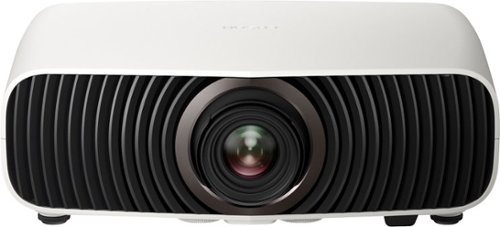
Engineered for uncompromising performance, the Epson Home Cinema LS7500 sets a new benchmark in 4K HDR digital projection. Powered by Epson~s proprietary 4K Display Technology~ with HDR and a unique 3-chip 3LCD projection engine with a laser array light source, the Home Cinema LS7500 delivers breathtaking picture brightness and clarity, exceptional color accuracy, and impressive black contrast. The result is a truly immersive big picture experience designed to exceed expectations. Powered by an advanced Picture Processor, Epson 4K Display Technology~ produces a full 8.29-million-pixel on-screen image for amazing picture clarity without sacrificing brightness. While the 3-chip 3LCD projection engine powered by a laser array light source produces an impressive 3,500 Lumens of Color Brightness (IDMS Rated) and 3,500 Lumens of White Brightness (ISO Rated)~ for an exceptional HDR cinematic experience. Featuring a unique shorter-throw lens, the Home Cinema LS7500 can be positioned up to three feet closer to the wall versus conventional projectors~while still producing an immersive picture up to 300''. This reduced throw distance allows for larger screen sizes in spaces where room depth is limited. And with support for multiple screen aspect ratios~from 16:9 HDTV to widescreen 21:9~you~ll create a true cinematic experience not possible with standard TVs. With dual HDMI ports, the Home Cinema LS7500 handles 4K HDR content up to 120Hz for outstanding picture clarity. High refresh rates along with an Auto Low Latency Mode (ALLM) work together to reduce input lag and screen tearing for cinematic playback exactly as the director intended, while also providing an awesome platform for competitive fast-paced 4K HDR gaming. Engineered for easy installation, the Home Cinema LS7500 features a compact, whisper-quiet front-exiting airflow design, and a wide-range manual lens shift providing greater placement freedom and easier integration into custom home entertainment spaces. The result is a seamless installation experience and exceptional versatility for a wide range of room configurations. From the world~s best-selling projector company, the Epson Home Cinema LS7500 will become the centerpiece of your 4K HDR home theater experience for years to come.
Customer Rating
5
A marked improvement over lamp-based projectors
on September 23, 2026
Posted by: NAMO
PROS
HUGE Improvement in Fan Noise
Much Better Brightness
Improved Color Saturation
20,000 Hour Laser Life
Accepts 12-bit, 4k Image
Considerable Amount of Manual Lens Adjustment
HUGE Improvement in Fan Noise
Much Better Brightness
Improved Color Saturation
20,000 Hour Laser Life
Accepts 12-bit, 4k Image
Considerable Amount of Manual Lens Adjustment
CONS
Laser Light Engine Not Serviceable
Shorter Throw Often Requires Projector Movement
Uses Pixel-Shifting to Achieve 4k
Laser Light Engine Not Serviceable
Shorter Throw Often Requires Projector Movement
Uses Pixel-Shifting to Achieve 4k
INSTALLATION
The 7500 has a considerably shorter throw distance than traditional Epson projectors. Even at maximum zoom, I had to relocate the 7500 in my dedicated home theater. Not a huge deal, but it was time consuming. I knew going in that the 7500 was a shorter throw than my existing Epson 3800, but I was surprised at just how short the throw really is. Installation distance for my 120" 16x9 theater screen is 12 feet. This is at maximum zoom. This is close to 2 feet closer to the screen than my 3800 which was at its middle zoom setting. Ideal placement for the 7500 to fill a 120" screen would be about 10 feet from the screen. This would give the buyer plenty of room within the zoom setting to fine tune the picture.
The 7500 has a considerably shorter throw distance than traditional Epson projectors. Even at maximum zoom, I had to relocate the 7500 in my dedicated home theater. Not a huge deal, but it was time consuming. I knew going in that the 7500 was a shorter throw than my existing Epson 3800, but I was surprised at just how short the throw really is. Installation distance for my 120" 16x9 theater screen is 12 feet. This is at maximum zoom. This is close to 2 feet closer to the screen than my 3800 which was at its middle zoom setting. Ideal placement for the 7500 to fill a 120" screen would be about 10 feet from the screen. This would give the buyer plenty of room within the zoom setting to fine tune the picture.
One thing that does help in installation, or in my case, relocation, is the huge amount of lens shift. Epson's new 7500 has substantially more lens adjustment than my previous Epson projectors. I'm not talking about digital keystone correction either. I'm talking the ability to finely tune the aim and throw of the lens. Buyers need to just get the projector's image as close as possible to the screen. Once installed, the manual tuning knobs can fine-tune the lens' throw to perfectly align the projector to the screen. I was surprised at just how much adjustment there is in the shift of the lens. It definitely made installation and aiming substantially easier than my last 2 projectors.
LASER vs. UHP LAMPS
Epson is not the first player using lasers as a light source. Some lasers have left users wanting, as the lasers just couldn't get as bright as a traditional UHP lamp in an LCD projector. I am happy to report that this is not an issue that plagues the Epson 7500. I am surprised at just how bright and vibrant the picture is. Epson claims up to 3500 lumens of brightness and I believe it. Of the numerous projectors I've owned and installed over the years, this 7500 is brighter than any I've used to date, aside from dedicated conference projectors.
Epson is not the first player using lasers as a light source. Some lasers have left users wanting, as the lasers just couldn't get as bright as a traditional UHP lamp in an LCD projector. I am happy to report that this is not an issue that plagues the Epson 7500. I am surprised at just how bright and vibrant the picture is. Epson claims up to 3500 lumens of brightness and I believe it. Of the numerous projectors I've owned and installed over the years, this 7500 is brighter than any I've used to date, aside from dedicated conference projectors.
One thing that the 7500 does far better than any other UHP lamp-based projectors I've owned and installed is the fan noise. I've ALWAYS set my projectors to Eco mode. Not just because I have a light-controlled, dedicated theater, but because I find the fan noise emitted from projectors to be objectionably loud. It's not just an Epson issue either. Their competitors' projectors all suffer from the same inherent weakness. The UHP lamps run very hot and they need adequate air flow to survive. Epson's new laser light engine changes the status quo. It's obviously and immediately quieter than ANY UHP projector I've used. In addition to the improvements in noise, the new laser light engine is designed to last up to 20,000 hours. MUCH longer than the average 2,000 hours I get out of a UHP lamp. Granted those lamps' lives can be extended by using them in Eco mode like I do, but I have yet to have a UHP lamp go much over 3,000 hours before needing to be replaced.
Lastly, one area that UHP lamp can never beat a laser as a light source is the start-up time. Epson's laser light engine fires off nearly instantaneously and at full brightness. Much like a traditional TV. After more than a decade of UHP based projectors, I no longer have to wait for the lamp to warm up and slowly come to full brightness.
PICTURE QUALITY
Brightness - The improvement in the picture compared to my Epson 3800 and even my older 5040UB is quite striking. A big part of this, is the ability to run the 7500 at maximum brightness without the fan being so objectionably loud that it destroys the home theater ambience. I liked my 3800 and my 5040, but I had to use them on Eco mode to keep the fan noise down to a tolerable level. Any setting other than Eco and the fans were just obnoxious during quiet scenes in movies. Not the 7500. I'm not sure if it is because of the new laser light engine in the 7500 or a better designed cooling solution, but the differences in noise levels is striking.
Brightness - The improvement in the picture compared to my Epson 3800 and even my older 5040UB is quite striking. A big part of this, is the ability to run the 7500 at maximum brightness without the fan being so objectionably loud that it destroys the home theater ambience. I liked my 3800 and my 5040, but I had to use them on Eco mode to keep the fan noise down to a tolerable level. Any setting other than Eco and the fans were just obnoxious during quiet scenes in movies. Not the 7500. I'm not sure if it is because of the new laser light engine in the 7500 or a better designed cooling solution, but the differences in noise levels is striking.
For most accurate color reproduction, I run the 7500 in Cinema mode. But unlike my 3800, I run the brightness at 100%. The improvement in acoustics is nearly night and day. I've never had an Epson projector with a UHP lamp that could compare to the 7500 in terms of brightness and fan noise. Even at 100% brightness, the 7500 is quieter than my 3800 in Eco mode. Outstanding!!
Color - Another area the 7500 excels at is color saturation. I was taken aback at just how much more saturation there is in the colors. Maybe it was because I am used to Eco mode, but the 7500's colors are strikingly better than my previous projectors to date. The colors actually pop now, where they never did with my old 5040UB or my 3800. I've watched several movies and shows with the 7500 and have been pleasantly surprised every time I've turned it on. It is that much better than my others ever were.
Contrast - This is an area where no projector can compete with a decent TV set. Not even close. However, setting the 7500's dynamic iris to fast does help with the overall contrast. Unlike my 5040UB and 3800, I can't hear the 7500's motorized shutter doing its thing during movies. The improvements in the lens mechanism have paid dividends over the years. While a projector will never be able to compete with a decent TV in contrast, I have noticed an overall improvement in contrast compared to projectors of years past.
Uniformity - This is often a tough one for projectors to get accurate. Throwing that much light on that big of a screen poses a challenge. I am happy to report that I have noticed no color, brightness, or focus uniformity errors as of this review.
CONS
First. The laser light module is not user serviceable. Unlike a UHP lamp that can be replaced, the laser module cannot, at least not that I can find.
First. The laser light module is not user serviceable. Unlike a UHP lamp that can be replaced, the laser module cannot, at least not that I can find.
Second. Make sure you measure your room before purchase. The shorter throw may require relocating your mount and/or wiring, like I had to do. Not a deal breaker, and considering the HUGE improvement in picture quality, well worth the tradeoff. But this projector may not be a simple plug-and-play device for some.
Third. While Epson sells this as a 4k projector, it really isn't a true 4k projector. Like most other consumer projectors, this one also uses "pixel shifting" to improve the clarity of an image. Yes, the 7500 accepts a 12-bit, 60Hz, 4k image, but at the end of the day, it is still a 3-panel, 1200p image. Pixel-shifting does improve picture quality, but it still isn't as crisp and clear as a true 4k panel.
CONCLUSION
I can't find anything not to like about Epson's latest home theater projector. I'm still surprised every time I go into the theater to watch something. It's hard to put into words just how much better the picture is compared to my 5040 and 3800.
I can't find anything not to like about Epson's latest home theater projector. I'm still surprised every time I go into the theater to watch something. It's hard to put into words just how much better the picture is compared to my 5040 and 3800.
A brighter image. Improved and more dynamic colors. WAY less fan noise. 20,000-hour lamp life. Not to mention every time I've had to contact Epson for support in the past, their customer service has been second to none.
As TV's become bigger and bigger for less and less, it was hard to justify a projector. This at least was my case. Aside from my dedicated surround sound system, there was little reason to use my theater over watching a movie on my big TV. The TV had a more enjoyable picture. My theater had become a mostly unused room in the house. The 7500 changes that. The picture quality is so much better, and the fan noise is so much less, that the theater is becoming the Friday night / Sunday game day hub that it once was. The new Epson 7500 has found a permanent home in my theater.
HIGHLY RECOMMENDED
I would recommend this to a friend!




Share this review:


+2points
2of 2voted this as helpful.
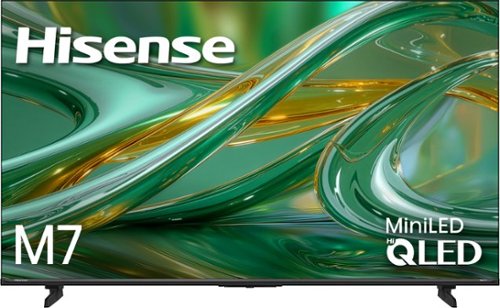
The Hisense M7 Series brings a brighter, natural-looking image to your screen with Mini-LED technology and Hi-QLED Color. Experience deeper contrast, vivid details, and a more dynamic viewing experience that elevates movies, live sports, and gaming alike. The Anti-Reflection & Glare-Free screen cuts down on distracting reflections from windows and overhead lights, so you can enjoy a clear, comfortable view from any seat in the room. AI Picture with AI 4K Upscaling makes what you watch look sharper ~ even older content. Dolby Vision and DTS Virtual:X deliver a big, theater-like experience with rich visuals and powerful sound. Game Mode Plus helps minimize lag for smoother, more responsive gameplay. And built on the Roku TV platform, the M7 Series makes it easy to access a wide selection of streaming entertainment.
Customer Rating
4
A lot of value for the money
on September 23, 2026
Posted by: NAMO
TLDR: The new Hisense M7 offers a ton of value for the money. The Quantum Dots add vibrance and Hisense includes a very well-designed picture calibration suite.
PROS
Rich, Vibrant Colors
Direct Backlit Display
240Hz Max Refresh Rate
Picture Calibration Suite
11-Point Grayscale Accuracy
Supports Dolby Vision, HDR10, and HLG Content
Rich, Vibrant Colors
Direct Backlit Display
240Hz Max Refresh Rate
Picture Calibration Suite
11-Point Grayscale Accuracy
Supports Dolby Vision, HDR10, and HLG Content
CONS
Out of Box Color Accuracy
Difficult to Tune Colors
Colors Very Red Near Peak Brightness
Few Local Dimming Zones
Out of Box Color Accuracy
Difficult to Tune Colors
Colors Very Red Near Peak Brightness
Few Local Dimming Zones
SET-UP & INSTALLATION
Roku TV's are so easy to set-up and configure, it's hard not like them. Scan a QR code and log into your Roku account and things are well on your way. Pick your streaming apps of choice and they are instantly downloaded, installed, and logged in. It doesn't get any simpler or easier. For a TV measuring in at 75", the M7 is impressively light and easy to manage. An easy two-person job to lift and mount on the wall.
Roku TV's are so easy to set-up and configure, it's hard not like them. Scan a QR code and log into your Roku account and things are well on your way. Pick your streaming apps of choice and they are instantly downloaded, installed, and logged in. It doesn't get any simpler or easier. For a TV measuring in at 75", the M7 is impressively light and easy to manage. An easy two-person job to lift and mount on the wall.
PICTURE QUALITY
Out of the box picture quality is sub-par to say the least. Picking the movie preset and warm color temp (historically the most accurate settings) and colors were WAY off. Far too much red. Changing the color space from warm to normal took the red out but moved the picture too far in the other direction making it too cold (blueish). The Cool temp setting was nearly unwatchable as colors were just too far off to be enjoyable. Honestly, I was a bit concerned. I could live with the Normal setting, but it was obviously out of adjustment and the Warm and Cool setting were horrendous.
Out of the box picture quality is sub-par to say the least. Picking the movie preset and warm color temp (historically the most accurate settings) and colors were WAY off. Far too much red. Changing the color space from warm to normal took the red out but moved the picture too far in the other direction making it too cold (blueish). The Cool temp setting was nearly unwatchable as colors were just too far off to be enjoyable. Honestly, I was a bit concerned. I could live with the Normal setting, but it was obviously out of adjustment and the Warm and Cool setting were horrendous.
Digging through the menus, I noticed Hisense's substanial picture calibration settings. SWEET!! I wish more manufacturers included such a comprehensive suite of adjustments with their TV's. The Hisense allows basic settings like Color, Hue, Saturation, etc., but also includes the ability to make finite adjustments. Most impressive of which, is their built-in 11-point grayscale adjustment feature. If buyers can get the grayscale nailed, colors often fall in line. Not always, but often. Nailing the grayscale settings will improve overall picture quality of any TV, even if the TV can't accurately reproduce the primary and secondary colors, it will still improve the overall color accuracy of the display.
I spent quite a bit of time getting the grayscale dialed in. I was surprised at how much red was in the picture. I had to take ALOT of red out towards the top end of peak brightness. More than I have ever had to do with any TV to date. However, there was plenty of room for adjustment, with some left over. Yes, I could have started with Normal or Cool, but it would have required similar adjustments, just with the removal of different colors. I didn't spend much more time getting the remaining colors dialed to perfection but was happy with the overall picture quality after nailing grayscale. It's nice to know that if I choose to go back and tweak the setting even further, there is the ability to do so within the Hisense menus. I'm going to wait until the LED panels get more time on them before deciding whether or not to delve further into this endeavor.
BLACK LEVELS / CONTRAST
I have another 70" Hisense Roku TV in my workout room. I bought it several Black Fridays ago. It was on super sale but unfortunately is an edge-lit panel. Why do I mention this? Because the direct backlit panel of M7 is far superior to its edge-lit sibling. The M7 does a substantially better job at controlling light output in the darkest scenes of programming. The difference in quality between a back-lit panel and its edge-lit siblings are worth the price of admission. Black levels and overall contrast are not even in the same league. This M7 puts my edge-lit Hisense to shame.
I have another 70" Hisense Roku TV in my workout room. I bought it several Black Fridays ago. It was on super sale but unfortunately is an edge-lit panel. Why do I mention this? Because the direct backlit panel of M7 is far superior to its edge-lit sibling. The M7 does a substantially better job at controlling light output in the darkest scenes of programming. The difference in quality between a back-lit panel and its edge-lit siblings are worth the price of admission. Black levels and overall contrast are not even in the same league. This M7 puts my edge-lit Hisense to shame.
However, one area that this TV falls short of its competition and higher-end siblings is the number of overall local dimming zones. This 75M7SR has a low 180 local dimming zones. Most pricier TV's in this size have dimming zones that reach into the thousands. Because of this, the M7 does experience more haloing and light bleed than other TV's, but nowhere near the issue that edge-lit panels experience. By my calculations, each dimming zone in the M7 is approximately 3.6 square inches. By comparison, top-tier TV's in this class and size often have dimming zones measuring less than .75 square inches.
FINAL THOUGHTS
Is the M7 a good TV? Honestly, yes. It is quite good for the price. No, it doesn't have the best light control abilities. Yes, it colors are wildly inaccurate out of the box. With that, the colors can be tuned quite nicely, more accurately than many TV's in its price point. Many TV's still use edge-lit panels to control price. The M7 is superior to ANY edge-lit LED panel. The only real trade off with the M7 over pricier models is the limited number of local dimming zones. However, this would be unnoticeable in the real world if you aren't watching dim, moody movies or sci-fi shows with a lot of space scenes. For sports and day-to-day viewing, buyers would be hard pressed to find any real issue in the limited number of dimming zones or the M7 as a whole.
Is the M7 a good TV? Honestly, yes. It is quite good for the price. No, it doesn't have the best light control abilities. Yes, it colors are wildly inaccurate out of the box. With that, the colors can be tuned quite nicely, more accurately than many TV's in its price point. Many TV's still use edge-lit panels to control price. The M7 is superior to ANY edge-lit LED panel. The only real trade off with the M7 over pricier models is the limited number of local dimming zones. However, this would be unnoticeable in the real world if you aren't watching dim, moody movies or sci-fi shows with a lot of space scenes. For sports and day-to-day viewing, buyers would be hard pressed to find any real issue in the limited number of dimming zones or the M7 as a whole.
RECOMMENDED
I would recommend this to a friend!



Share this review:


0points
0of 0voted this as helpful.
NAMO's Review Comments
NAMO has not submitted comments on any reviews.
NAMO's Questions
NAMO has not submitted any questions.
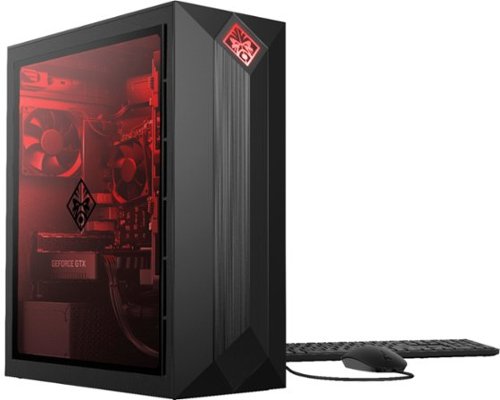
HP OMEN Obelisk by HP Desktop: Play graphically intense games with this HP OMEN Obelisk desktop computer. You can easily store large amounts of media and other data on the 1TB hard drive and install games and programs on the 256GB SSD for fast access. This HP OMEN Obelisk desktop computer has 16GB of memory for multitasking effectively, and the Intel Core i7-9700 processor handles resource-intense programs efficiently.
How many cores are there in this pc
8 Cores / 8 Threads. Intel has disabled hyper-threading on its i7 processors.
7 years, 5 months ago
by
NAMO
HP OMEN Obelisk by HP Desktop: Play graphically intense games with this HP OMEN Obelisk desktop computer. You can easily store large amounts of media and other data on the 1TB hard drive and install games and programs on the 256GB SSD for fast access. This HP OMEN Obelisk desktop computer has 16GB of memory for multitasking effectively, and the Intel Core i7-9700 processor handles resource-intense programs efficiently.
The advertisement and stated processor says its a 9th gen i7-9700 however if you click on the pdf information for this computer it states that it is an 8th Gen i7-8700? Also indicates that graphics are onboard and not the GPU?
It is the 9th Generation 9700 processor with an nVidia GTX 1660Ti graphics card. I believe all the Intel processors include onboard graphics.
7 years, 5 months ago
by
NAMO
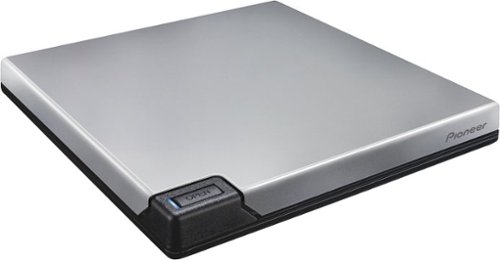
This Pioneer BDR-XD05S external drive allows you to archive up to 128GB of data on BD-R QL media and up to 100GB of data on BD-R TL media, plus supports DVD and CD formats, so you can burn your favorite movies and music to discs.
can a windows 7 computer boot from this drive ?
You should have no issues as long as your bios supports this feature.
9 years, 3 months ago
by
NAMO
This Pioneer BDR-XD05S external drive allows you to archive up to 128GB of data on BD-R QL media and up to 100GB of data on BD-R TL media, plus supports DVD and CD formats, so you can burn your favorite movies and music to discs.
Is this compatible with a Surface Book?
Mine did not work correctly with a Surface Pro, even with a powered hub. It has worked perfectly with every other computer and/or laptop I've tried it with, though.
9 years, 3 months ago
by
NAMO
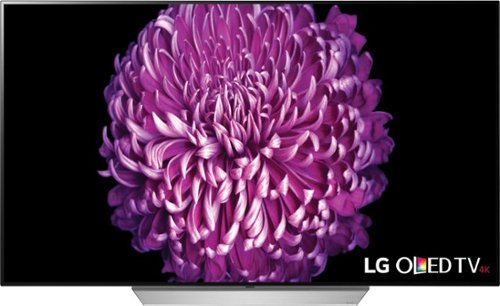
Relax and enjoy your favorite films, sporting events or shows on the expansive 65-inch screen of this LG 4K HD TV. Active HDR with Dolby Vision creates an immersive experience with clear images. This LG 4K HD TV features a thin OLED design, giving the television a slender silhouette that doesn't take up much space.
Difference between the 2016 vs 2017 models? Any one what the pros/cons?
From my research, it appears the big differences are that the 2017 models come with LG's latest OS installed (WebOS 3.5 vs WebOS 3.0). LG has also worked some magic on the video processing too. They are now able to get more detail in the very darkest portions of an image, where the 2016 models would sign off on the darkest details earlier & just represent them as total black. Lastly, they able to tweak the light output on the panels to improve overall brightness, which was a common complaint of the 2016 models that were installed in fairly bright rooms from what I have heard.
Thanks. Hope this helps.
Thanks. Hope this helps.
9 years, 5 months ago
by
NAMO
Relax and enjoy your favorite films, sporting events or shows on the expansive 65-inch screen of this LG 4K HD TV. Active HDR with Dolby Vision creates an immersive experience with clear images. This LG 4K HD TV features a thin OLED design, giving the television a slender silhouette that doesn't take up much space.
When is bestbuy going to sell the LG B7 65 inch model?
I don't think they will. It is my understanding that the B7 is identical to the C7, but intended for Costco and/or Sam's only.
9 years, 5 months ago
by
NAMO