WhirlpoolTeam
WhirlpoolTeam's Stats
Reviews
- Review Count0
- Helpfulness Votes0
- First ReviewNone
- Last ReviewNone
- Featured Reviews0
- Average Rating0
Reviews Comments
- Review Comment Count0
- Helpfulness Votes0
- First Review CommentNone
- Last Review CommentNone
- Featured Review Comments0
Questions
- Question Count0
- Helpfulness Votes0
- First QuestionNone
- Last QuestionNone
- Featured Questions0
- Answer Count17771
- Helpfulness Votes7,133
- First AnswerJune 16, 2015
- Last AnswerSeptember 11, 2026
- Featured Answers0
- Best Answers891
WhirlpoolTeam's Reviews
WhirlpoolTeam has not submitted any reviews.
WhirlpoolTeam's Questions
WhirlpoolTeam has not submitted any questions.

Keep your kitchen stocked with fresh food by using this 21.7 cu. ft. Whirlpool side-by-side refrigerator. It has adjustable door bins that fit gallon jugs, tall bottles and other large containers, saving space on the interior shelves. This energy-efficient Whirlpool side-by-side refrigerator has an intuitive temperature management system that prevents the compressor from running unnecessarily.
Does the freezer have adjustable shelves?

Hello! We appreciate you reaching out to us with your question regarding the Whirlpool® Refrigerator model WRS312SNHW. We understand that having adjustable shelving can make organizing your freezer easier, so we want to clarify that the shelves in this model are fixed and cannot be repositioned. We apologize for any inconvenience this may cause for your storage needs.
5 days ago
by
Posted by:
WhirlpoolTeam
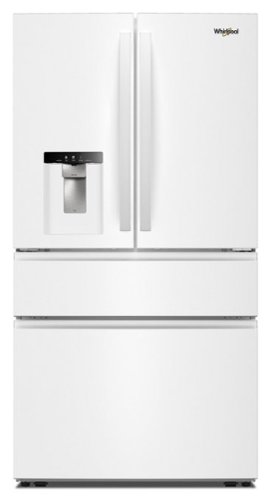
Get Family-Sized capacity with the Whirlpool 29 Cu. Ft. French Door Refrigerator with Flexible Temperature Drawer. Get filtered water at the push of a button with In-Door Filtered Water Dispenser & Ice Maker. Flexible storage with full and half Adjustable Glass Shelves. And Pint Size Storage provides easy access to small items.
Are the door hinges zero clearance?
Thank you for reaching out to us regarding Whirlpool® appliances. We understand how important door clearance and fit are when selecting the right refrigerator for your space.
Whirlpool® Refrigerator model WRMF3636SW does not feature zero clearance doors. We appreciate your interest and want to ensure you have all the information needed to find the perfect appliance for your home.
Whirlpool® Refrigerator model WRMF3636SW does not feature zero clearance doors. We appreciate your interest and want to ensure you have all the information needed to find the perfect appliance for your home.
5 days ago
by
Posted by:
WhirlpoolTeam
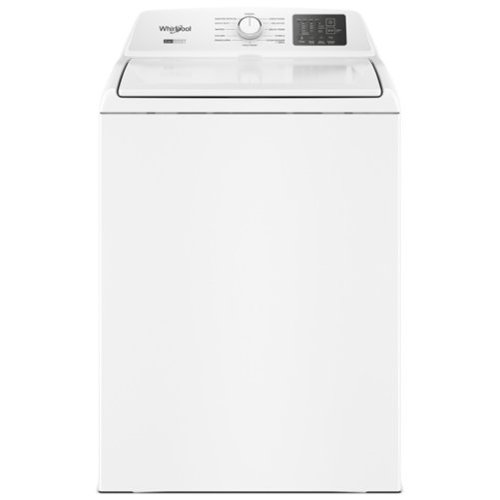
Choose how you handle each hamper with the Whirlpool Top Load Washer with 2-in-1 Removable Agitator. The 2-in-1 Removable Agitator lets you choose how you wash. Easily swap in the agitator to help with soils or remove for extra capacity to fit large & bulky items. Presoak helps you to gently release soils with a 30 minute presoak and wash all in one cycle. Sanitize cycle cleanses loads with increased wash temps and Oxi. Cold Water Wash allows you to get a thorough clean and save on energy bills.
wanted to see how to add fabric softener
Hello! For model WTW4107SW Whirlpool suggests using the Downy Ball® dispenser.
Thank you for your inquiry about our Whirlpool® appliances.
Thank you for your inquiry about our Whirlpool® appliances.
5 days ago
by
Posted by:
WhirlpoolTeam
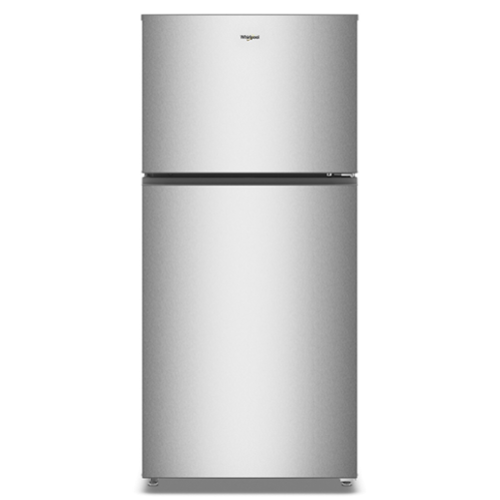
This Whirlpool 29.5-inch Wide Top Freezer Refrigerator with Total Coverage Cooling helps prevent cold spots on every shelf. A Flexi-Slide Deli Drawer shifts to make space for tall items, along with Adjustable Glass Shelves that flex to fit what you reach for most. The Adjustable Door Bins shift up or down for family organization and the FreshSpace and Humidity-Controlled Crispers help keep produce fresh.
Is there rollers on the fridge that can move around easily? How many rollers ? Thanks
Hello! Thank you for reaching out to us with your inquiry about your Whirlpool® refrigerator, model WRTX3119SZ.
We are happy to confirm that this model is equipped with a set of 4 wheels, which can help with positioning the unit when needed.
We are glad to help answer your question, and please let us know if we can assist you with anything else!
We are happy to confirm that this model is equipped with a set of 4 wheels, which can help with positioning the unit when needed.
We are glad to help answer your question, and please let us know if we can assist you with anything else!
6 days ago
by
Posted by:
WhirlpoolTeam
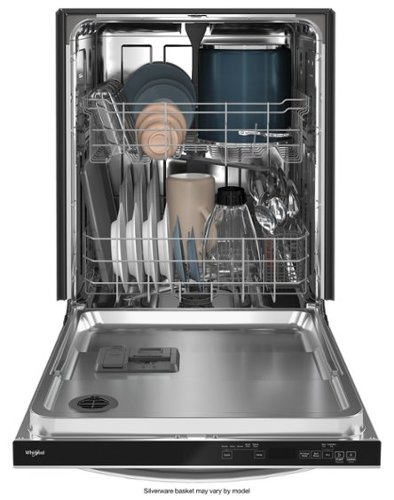
Load more, run less in this large capacity dishwasher. With a Top Rack tall enough to fit a stock pot, you can fit all the dishes your family piles up. Plus, you can move or separate the flexible 3-Piece Silverware Basket to make extra space for large pans and casserole dishes.
How do you get the top rack out?
Hello! To remove the top rack on Whirlpool® Dishwasher model WDT740SALZ, To remove the rack, pull the rack out until it stops. On the left and right side of the rack, push the plastic track stops on the front of the rail sideways to open them. Pull out the rack. To replace the rack, push the rack back onto the rails. Push the track stops closed. https://s3.amazonaws.com/sm-backend-production-attachments/owners-manual-w11323304-revj.pdf Thank you for your inquiry about our Whirlpool® appliances.
6 days ago
by
Posted by:
WhirlpoolTeam
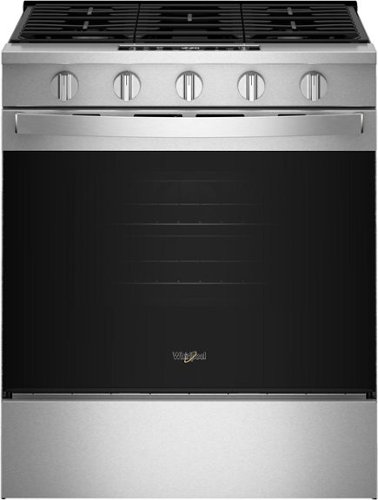
Experience the difference of Air Cooking Technology with this Whirlpool 30 inch gas range. Get crispy with our most advanced No Preheat Air Fry mode, and even results on every rack with Air Baking. Cook up all that delights, all at once with Griddle Zone, make feel good meals with a variety of Cooking Modes, and tackle your to-do list with smart features built for multitasking.
Can u turn air fry off
Hello! Thank you for reaching out to us with your inquiry about your Whirlpool® range, model WSGS5030SZ.
We are happy to assist you! Yes, you can certainly turn off the Air Fry feature. It is a convenient feature available on your range, and you have the flexibility to deactivate it whenever it is not in use.
We are glad to help clarify this for you, and please let us know if we can assist you with anything else!
We are happy to assist you! Yes, you can certainly turn off the Air Fry feature. It is a convenient feature available on your range, and you have the flexibility to deactivate it whenever it is not in use.
We are glad to help clarify this for you, and please let us know if we can assist you with anything else!
6 days ago
by
Posted by:
WhirlpoolTeam
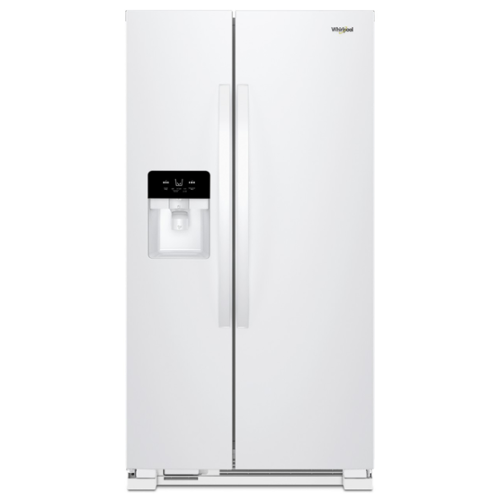
Fit and find it all in this side-by-side refrigerator with purposefully-designed storage spaces for items you use most. An in-door can caddy frees up shelf space while frameless glass shelves lets you store more items on each shelf for loading flexibility. The deli drawer gives you plenty of space to store meat and cheese, too.
does it have a freezer.
Hello! Thank you for reaching out to us with your inquiry about your Whirlpool® refrigerator, model WRS325SDHW.
We are happy to confirm that this model does feature a freezer located on the left side. For your planning, the freezer capacity is 9.11 ft³ and the refrigerator section provides 15.44 ft³ of space.
We are glad to help clarify this for you, and please let us know if we can assist you with anything else!
We are happy to confirm that this model does feature a freezer located on the left side. For your planning, the freezer capacity is 9.11 ft³ and the refrigerator section provides 15.44 ft³ of space.
We are glad to help clarify this for you, and please let us know if we can assist you with anything else!
6 days ago
by
Posted by:
WhirlpoolTeam
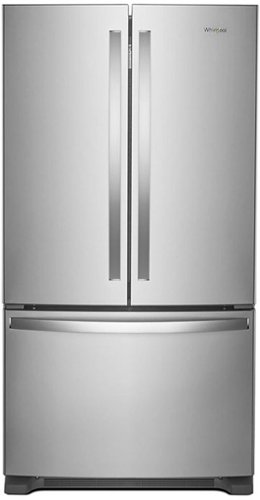
Get the storage your family needs and easily access filtered water with this refrigerator's water dispenser. Humidity-controlled crisper drawers provide room to store fruits and veggies in their ideal environment. This ENERGY STAR certified refrigerator also has LED lighting to keep food looking as great as it tastes.
is it fingerproof
Hello! Thank you for reaching out to us with your inquiry about your Whirlpool® refrigerator, model WRFF3236RZ.
We are happy to confirm that this model features our Fingerprint Resistant Stainless Steel finish, which is designed to help keep your appliance looking clean and beautiful.
We are glad to help answer your question, and please let us know if we can assist you with anything else!
We are happy to confirm that this model features our Fingerprint Resistant Stainless Steel finish, which is designed to help keep your appliance looking clean and beautiful.
We are glad to help answer your question, and please let us know if we can assist you with anything else!
6 days ago
by
Posted by:
WhirlpoolTeam
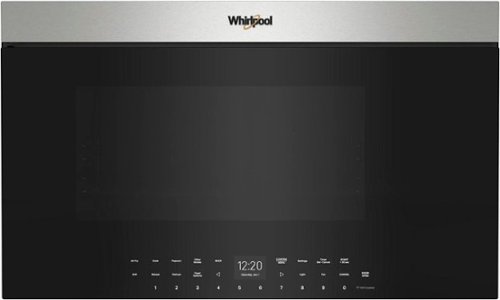
This microwave and air fryer combo crisps and caramelizes food with cooking modes like Air Fry Mode and Roast Mode. Monitor cooking progress while foods are in the microwave with Smart Features.* This flush mount microwave features a built-in design** that sits flush against cabinets to elevate your kitchen's style, while the Turntable-Free Design makes for easy cleaning after mealtime.
Does this model come without stainless in all black?
Hello! Yes, we do offer this model in Black. It would be model WMMF7330RB. Please reach out to Best Buy Customer Care at 1-888-237-8289 for further assistance on availability. We hope this helps.
6 days ago
by
Posted by:
WhirlpoolTeam
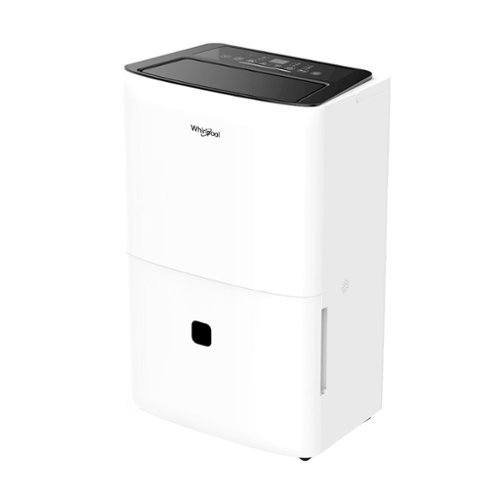
Take control of excess moisture and enjoy a more comfortable home with the Whirlpool 25 Pint Energy Star Certified Dehumidifier. Designed to remove up to 25 pints of moisture per day with an impressive 1.85 IEF & Energy Star 6.0 certification, it delivers powerful performance while helping reduce utility costs. Smart electronic controls make comfort effortless. An adjustable humidistat ranging from 35 - 80%, Comfort Mode, and a color-coded humidity indicator let you monitor conditions at a glance and fine-tune settings with ease. Enhanced airflow, powered by three fan speeds and auto-swing air discharge, distributes dry air evenly for faster, more consistent results. This dehumidifier operates as quietly as 45 dBA and performs reliably in cooler environments down to 41F thanks to auto-defrost technology. A removable front-access bucket with automatic shutoff, optional continuous drainage, washable filter, and clear water-level window simplify maintenance.
How long is the power cord?
Hello! Thank you for reaching out to us about Whirlpool® appliances. We are glad to help!
We understand you are looking for assistance with your Whirlpool dehumidifier. Please note that our dehumidifiers are supported by a specialty department dedicated to these products. You can contact them directly Monday through Friday at 800-207-1156, or you can find additional resources by visiting http://www.whirlpoolhomecomfort.com/.
Please let us know if we can assist with anything else!
We understand you are looking for assistance with your Whirlpool dehumidifier. Please note that our dehumidifiers are supported by a specialty department dedicated to these products. You can contact them directly Monday through Friday at 800-207-1156, or you can find additional resources by visiting http://www.whirlpoolhomecomfort.com/.
Please let us know if we can assist with anything else!
6 days ago
by
Posted by:
WhirlpoolTeam